Thursday, February 27, 2014

Autism, Heavy Metals, BDNF and HSP-70

Autism Spectrum Disorder (ASD) Testing using Custom Quantibody® Array

We recently completed testing blood serum from ASD children. These children were all from Central Europe and lived in cities with heavy industries. All had elevated levels of heavy metals like Aluminum and Copper. We believe that these levels may be contributing to the pathogenesis of the ASD symptoms.

Though the sample was small, the results were striking. The elevated levels of Heat Shock Protein 70 (HSP 70) is consistent with high heavy metal toxicity. Studies have reported both elevated and decreased levels of Brian Derived Neurotrophic Factor (BDNF) vs healthy controls, but is always reduced in subjects with high heavy metal blood serum levels. Could these elevated heavy metals be a root factor ASD Children?


Based on these findings, we have proposed a 2 pronged treatment strategy:
  1. Bring heavy metal serum levels into acceptable balance.
  2. Treat ASD children with natural stem cell enhancing substances
Stem Cells are immune/inflammation supressive and capable of repairing tissue damage. Our theory is that this could result in improvement in ASD related symptoms. Testing serum levels of BDNF, HSP-70 and other select bio-markers would confirm therapeutic efficacy.

I will be posting results updates here so stay tuned.

Tuesday, February 25, 2014

Kinetic Assays and Stem Cell Toxicology Studies

UCB Derived hMSCs and Cobalt

Here're results from a recent Kinetic Assay study we conducted using our Umbilical Cord Blood Derived Stem Cells:

Images and Figure: Images: Dose-Response curve for Co++ toxicity to Hoechst-stained hMSCs (UCB Derived catalog number SC00A1-HC). The bar graph on the lower right shows cell counts verses [Co++] at 24, 48 & 72 hours exposure to Co++. Results at 144 hours showed massive cell death. The initial increase in cell counts at low concentration may reflect the well-known activation of HIFs by Co++. Counts were determined by Hoechst-stained MSCs and simultaneous propidium iodide staining shows increasing numbers of permeable (presumably dead) cells at 24, 48 & 72 hours post-Co++ during exposure to 10% DMSO. Images acquired on Biotek Cytation 3 imaging system.

We are currently designing  assays for testing small molecules and compounds. These are customized for Musculoskeletel Diseases Drug Discovery. They will be released in Q2 2014.

We also offer CRO Services. We have the ability to test different analytes and their impact on: Cell Migration, Differentiation and Expansion. This could include the study of toxic analytes on these behaviors. We are also assaying various supplements that claim to endogenously boost stem cells or other natural substances like Li-VPA. We can do these studies using your stem cells or ours.

Questions or interest? I can be reached at pshuster@neuromics.com or cell: 612-801-1007.

Thursday, February 20, 2014

More MOR Publications

Latest Mu Opioid Publications

Our Mu Opioid Receptor Antibodies have set the standard for the study of Pain Mechanisms. We have posted >40 publications referencing use of these antibodies.

Here's several published in 2014:

Charlie H.T. Kwok, Ian M. Devonshire, Andrew J. Bennett, Gareth J. Hathway. Postnatal maturation of endogenous opioid systems within the periaqueductal grey and spinal dorsal horn of the rat. PAIN - January 2014 (Vol. 155, Issue 1, Pages 168-178, DOI: 10.1016/j.pain.2013.09.0220. ...rabbit anti-MOR (Neuromics, Edina, MN, USA; 1:1000 with tyramide signal amplification protocol)...


Images: Immunohistochemical expression of opioid peptides and receptors in the DH (spinal cord dorsal horn) during postnatal development. (A) POMC (pro-opiomelanocortin) immunoreactivity in the dorsal horn in postnatal day (P)10, P21, and adult rats. White arrows depict where cell staining was found. Interestingly, fibre staining was also observed in the superficial dorsal horn (lamina I) of adult rats, but not in the younger ages. (B) Since both cell and fibre staining were observed, staining intensity was used to quantify the immunoreactivity of POMC in the DH. Quantified staining intensity for POMC in the DH significantly decreased as the animals aged, with highest immunoreactivity found at P10. (C) Enkephalin immunoreactivity in the DH was restricted to the superficial laminae and only fibre staining was observed. (D) Quantified staining intensity for enkephalin illustrate an age-dependent increase in immunoreactivity, which was highest at adult P10.(C) Enkephalin immunoreactivity in the DH was restricted to the superficial laminae and only fibre staining was observed. (D) Quantified staining intensity for enkephalin illustrate an age-dependent increase in immunoreactivity, which was highest at adult. (E) MOR (μ-opioid receptor) immunoreactivity in the DH, cell staining was found throughout the superficial and deeper laminae in all ages. (F) Cell count of MOR staining in the DH, which showed a significant increase as the animals aged (∗∗P<0 .01="" adult="" i="" p21="" vs="">


J. Desroches, J.-F. Bouchard, L. Gendron, P. Beaulieu. Involvement of cannabinoid receptors in peripheral and spinal morphine analgesia ☆ Neuroscience, Volume 261, 7 March 2014, Pages 23–42. http://dx.doi.org/10.1016/j.neuroscience.2013.12.030. ...The floating sections were then incubated in 1% sodium borohydride in PBS for 30 min, rinsed twice with PBS, and incubated for 30 min at room temperature in a blocking solution containing 3% normal goat serum (NGS) and 0.3% Triton X-100 in PBS. The sections were then incubated overnight at 4 °C with the guinea pig anti-MOP primary antibody (cat# GP10106; Neuromics, Minneapolis, MN, USA) diluted 1:1000 in the blocking solution. The floating sections were then washed in PBS and incubated with a goat anti-guinea pig secondary antibody conjugated with Alexa Fluor 488 (Molecular Probes, Invitrogen, Carlsbad, CA, USA) at a concentration of 1:1000 in PBS for 2 h at room temperature...

We will continue posting customer data and publications that give new insights into the mechanisms of pain.

Monday, February 10, 2014

Quantibody Arrays for Tracking Patient Health

Neuromics is working with Dr. Joe Smarda, a renowned Immunologist, to track levels of cytokines in the blood serum of his clients. We have selected RayBiotech's Quantibody® Arrays for these assays. The Clinics in Joe's network treat his clients for autoimmune related disorders.

Our regime is:
  1. Test clients pre-treatment
  2. Treat
  3. Test
  4. Refine treatment
  5. Test 
The specified treatment regime is continued until clients have blood serum cytokine levels that are in the range of our healthy controls. Here's data from our Quantibody® T-helper cell Cytokine Arrays (pre-treatment).

Figures IL-6, IL-1 beta, MCP-1 and PAI1 Array results in 4 clients with Autoimmune related Diseases.

We plan on posting these serial  testing results. They are designed to monitor status and indicate therapeutic effectiveness.

We will also be sharing some of the specific therapies being used. These will include treatments aimed at mobilizing endogenous stem cells. These cells have natural immune suppression/anti-inflammatory properties. Stay tuned.

Tuesday, January 28, 2014

Pot and Pain

The pressure for states to legalize Marijuana for medical and recreational use is building. The tax benefits are self evident.

The debate for many centers of "true medical benefits". That's why research on understanding analgesic pathways is so important. Ironically, this study was conducted by my friends at Université de Montréal and Université de Sherbrooke in Quebec Canada: J. Desroches, J.-F. Bouchard, L. Gendron, P. Beaulieu. Involvement of cannabinoid receptors in peripheral and spinal morphine analgesia ☆ Neuroscience, Volume 261, 7 March 2014, Pages 23–42. http://dx.doi.org/10.1016/j.neuroscience.2013.12.030.

These teams have proven expert is using our Opioid Receptor Antibodies in their pain research. Here's a synopsis:
•Analgesia is the most common feature shared by the cannabinoid and opioid systems.
•The role of the cannabinoid system in the morphine-induced analgesia is uncertain.
•Peripheral and intrathecal morphine analgesia is altered in cnr1KO and cnr2KO mice.
•This attenuation is neither caused by a MOP malfunction nor by its downregulation.


Images: Deletion of the CB1 or CB2 receptors has no effect on the expression of MOP in the spinal cord. Immunofluorescence of spinal MOP revealed that the expression of MOP in laminae I and II of the dorsal horn of the spinal cord did not differ between cnr1WT (A) and cnr1KO (B) mice or between cnr2WT (C) and cnr2KO mice (D).


Observations here further support the existence of interactions between the cannabinoid and opioid systems. The loss of peripheral and spinal morphine analgesia is apparently caused neither by a decrease in MOP spinal expression nor by altered binding properties or G protein coupling of this receptor in cnr1KO and cnr2KO mice. The mechanisms underlying the loss of morphine analgesia are not clear but could include the release of endogenous cannabinoids in structures along the pain pathway or a disrupted endocannabinoid tone.

It is important funding that enables researchers to understand the analgesic pathways of marijuana continues to grow. This research could yield better control of pain with reduced side effects.

Tuesday, January 21, 2014

FGF and Stem Cells-Options Matter

Proven, Potent and Cost Effective Fibroblast Growth Factors (FGF).

Neuromics have a wealth of expertise in Stem Cells, Media and Growth Factors. FGF is an important component of Stem Cell Based Assays. Our goal is to provide an FGF that fits your requirements like "hand in glove".

Here's a small sampling:
ISO-kine bFGF-100% animal free and serum free-is produced in the endosperm tissue of barley grain (Hordeum vulgare), that exhibits up to 50 times less protease activity than E.coli or mammalian cells. Barley seed is void of any human or animal viral contaminants that could jeopardize your cell culture.
Images A: Expression of OCT4 (green) in the ORF group. B: Expression of TRA-1-60 (green) in the ORF group.

...15 million MNCs were seeded per 150 cm2 tissue culture flask. Culture media was alpha MEM supplemented with 10% heat inactivated fetal bovine serum, 1 mM sodium pyruvate, 100 mM HEPES buffer, 1 mM sodium pyruvate, 100 U/ml penicillin, 100 μg/ml streptomycin, 0.29 mg/ml L-glutamine (all from Invitrogen, Mississauga, Ontario, Canada) and 5 ng/ml of basic FGF or FGF-2 (Neuromics, Edina, MN, USA). Plastic adherent MNCs were allowed to attach and proliferate for 7 days before the first media change under normal oxygen tension (21% O2; 95% air) at 37°C in a humidified incubator with 5% CO2...

Images: Histological characteristics of pellets formulated from mono-cultured MCs, mono-cultured BMSCs and co-cultures of MC and BMSCs after a total of 17 days culture in defined serum-free chondrogenic media. (A-B) Safranin O and collagen II immuno-histochemical staining of representative pellets from cells derived from the same donor. Magnification lens × 20; scale bar is 100 μm. Chowdhury et al. BMC Musculoskeletal Disorders 2013 14:216 doi:10.1186/1471-2474-14-216

We are working hard to provide unique and cost effective solutions for your Stem Cell Based Assay Requirements.

Monday, January 13, 2014

TRPV1 and Osteoarthritis Related Pain

Our TRPV Antibodies are widely used and frequently published. Many of these feature TRPVs' role in nociceptive pain. Specifically they play important roles in the detection of noxious stimuli and inflammatory hyperalgesia.

TRPV1 has been implicated in OA pain, both in animal models and by the finding that TRPV1 genetic variants are associated with the risk of symptomatic knee OA in humans: S Kelly, R J Chapman, S Woodhams, D R Sagar, J Turner, J J Burston, C Bullock, K Paton, J Huang, A Wong, D F McWilliams, B N Okine, D A Barrett, G J Hathway, D A Walsh, V Chapman. Increased function of pronociceptive TRPV1 at the level of the joint in a rat model of osteoarthritis pain. Ann Rheum Dis doi:10.1136/annrheumdis-2013-203413.
Methods: Rat spinal cord sections from MIA- and saline-treated rats (n=5/group) (see online supplemental methods) were incubated with a polyclonal guinea pig anti-TRPV1 antibody (1 : 500, Neuromics, Edina, Minnesota, USA catalogue number GP14100) and then with Alexa 568-conjugated goat anti-guinea pig secondary antibody (1:300, Molecular Probes). TRPV1 immunostaining was visualised with a Leica DMRB/DM4000 B fluorescence microscope and images were acquired using Openlab software (PerkinElmer)...


Images: Transient receptor potential vanilloid 1 (TRPV1) immunoreactivity in the spinal cord. TRPV1 immunofluorescence detected in superficial dorsal horn (10× magnification) in rat lumbar (L3–L5) spinal cord at day 28 post-intra-articular injection of saline (A) or mono-iodoacetate (MIA) (B). Minimum and maximum brightness values were altered (32.01 min and 90.14 max) using Image J so as to highlight the area of TRPV1 positive staining. (C) Quantification of TRPV1 immunofluorescence in superficial dorsal horn of spinal cord taken from rats at 14 or 28 days following intra-articular injection of MIA and at day 28 following intra-articular injection of saline. Data are expressed as mean and SEM (n=5 per group).

Clinical trials of oral TRPV1 antagonists have been limited by on-target-induced hyperthermia. Here experimental evidence for increased functional role of TRPV1 at the level of the joint in a model of OA pain and the demonstration that blockade of joint TRPV1 ablates sensory afferent sensitization and pain behaviour support future targeted site-specific investigations of the therapeutic potential of TRPV1 for OA pain associated with synovitis. This could be good news for OA sufferers.

Monday, December 30, 2013

Autism Spectrum Disorder and Biomarkers

We used our IFN-gamma and BDNF Sandwich Elisa Kits to test the levels of these biomarkers in the blood serum of 2 individuals with Austism Spectrum Disorder. We anticipated  that BDNF would be significantly up or down regulated and IFN-gamma up regulated as confirmed by the literature. see 10.1371/journal.pone.0020470 , DOI: 10.1371/journal.pone.0020470 and DOI: 10.1111/acps.12071.

Our testing results showed:
Figure 1: ASD and Biomarker Levels

Based on these initial findings we are developing a custom Quantibody® Antibody Array designed for the fine tuned testing of individuals with ASD. The biomarkers included in the array will be: HSP70, TGF-beta2, 
Caspase-7, IFN-gamma and BDNF.

Figure 2: ASD Markers vs Controls

These panels will enable us to determine the severity of ASD. From the results, we will be working with our collaborators to determine potential cell based therapies for improving the symptom and behaviors of ASD sufferers. As part of the therapeutic regimes the panels can then be used check on progress towards "wellness". 

This a key initiative for us in 2014 so stay tuned.

Tuesday, December 17, 2013

hMSCs and Mesen-X Media in Actions

Customer Feedback on Neuromics' Human Mesenchymal Stem Cells

The demand for these UCB derived hMSCs continues to grow. We do everything we can to insure users' success. This includes replacing cells if there are any issues.

It is always great to get documented feedback. Dr. Rodney Nash, CEO of Javeen Biosciences used their new Mesen-X media to grow the cells. This GMP manufactured media is TOTALLY serum and animal free. It is shipped at room temperature and requires no attachment agents.

Here's Dr. Nash's feedback: We recently used the hMSCs derived from Umbilical Cord Blood. Their performance was nothing less than excellent. We were highly impressed with their morphology and their doubling rate. In addition the cells respond very well to accutase and maintain their performance after passaging. We highly recommend this cell line."

Neuromics' hMSCs grown using Mesen-X Media

The poperties of this Media makes it an excellent solution for drug discovery. Neuromics will be distributing in early 2014 so there will be much more data to follow.

Saturday, December 07, 2013

Biochemistry of Hair Loss

Hair Follicle Stem Cells and the WNT Pathway

This publication hit my Radar because it referenced use of our Goat Polyclonal GFRA1 Antibody.


In this study, Researchers use Tbx18Cre knockin mouse line to ablate the Wnt-responsive transcription factor β-catenin specifically in  at E14.5 during the first wave of guard hair follicle formation. In the absence of β-catenin, canonical Wnt signaling is effectively abolished in cell clusters of precursors for the hair follicle dermal papilla (DP). Sox2+ dermal condensates initiate normally; however by E16.5 guard hair follicle numbers are strongly reduced and by E18.5 most whiskers and guard hair follicles are absent, suggesting that active Wnt signaling in dermal condensates is important for hair follicle formation to proceed after induction. To explore the molecular mechanisms by which Wnt signaling in dermal condensates regulates hair follicle formation, we analyze genome-wide the gene expression changes in embryonic β-catenin null DP precursor cells. We find altered expression of several signaling pathway genes, including Fgfs and Activin: Su-Yi Tsai, Rachel Sennett, Amélie Rezza, Carlos Clavel, Laura Grisanti, Roland Zemla, Sara Najam, Michael Rendl Wnt/β-catenin signaling in dermal condensates is required for hair follicle formation. Developmental Biology, Available online 3 December 2013. http://dx.doi.org/10.1016/j.ydbio.2013.11.023

Could manipulating PDs be the answer for halting hair loss or better yet reverse the process? This research moves us closer.

Sunday, December 01, 2013

In vivo Like Cell Based Assays!

Save 100 USD on our Potent, Pure and Easy to Culture Stem and Progenitor Cells

We continue to design in vivo like behaviors into our  Cell Based Assays.
Our goal is to enable you to make better research decisions earlier
in your discovery process.

These assays are engineered using our proven, potent and easy to culture eSC and Adult Human Stem Cells and Progenitors.

UCB Derived hMSC differentiated to Osteoblast. Note the calcium depositions.

***December Promotions-New Products-Save 100 USD+ 
on Primary and Stem Cells, Media, Markers and Growth Factors***
I'll be posting videos of our in vivo like assays with specific quantitative data here soon.

Sunday, November 24, 2013

Microelectrodes for On-Chip Manipulation of Human Mesenchymal Stem Cells

Amping up Osteogenesis Assays for Drug Discovery

Neuromics and Vitrobiopharma are developing kinetic, differentiation asssays for improving the Drug Discovery process for Osteo-related diseases like Osteoporosis and Osteoarthritis. We have the ability to develop in vivo like assays with quantitative endpoints. The foundation of these assays are potent, easy to culture and cost effective Human Mesenchymal Stem Cells (hMCSCs).

I wanted to share an excellent study using our hMSCs for Osteogenesis Assays: Hsiao, Y.-S., Kuo, C.-W. and Chen, P. (2013), Multifunctional Graphene–PEDOT Microelectrodes for On-Chip Manipulation of Human Mesenchymal Stem Cells. Adv. Funct. Mater., 23: 4649–4656. doi: 10.1002/adfm.201203631. This represents a novel approach for Osteogenesis Assays and illustrates the capabilities of our hMSCs.
Absract: All-solution-processed multifunctional organic bioelectronics composed of reduced graphene oxide (rGO) and dexamethasone 21-phosphate disodium salt (DEX)-loaded poly(3,4-ethylenedioxythiophene) (PEDOT) microelectrode arrays on indium tin oxide glass are reported. They can be used to manipulate the differentiation of human mesenchymal stem cells (hMSCs). In the devices, the rGO material functions as an adhesive coating to promote the adhesion and alignment of hMSC cells and to accelerate their osteogenic differentiation. The poly(L-lysine-graft-ethylene glycol) (PLL-g-PEG)-coated PEDOT electrodes serve as electroactive drug-releasing electrodes. In addition, the corresponding three-zone parallel devices operate as efficient drug-releasing components through spatial-temporal control of the release of the drug DEX from the PEDOT matrix. Such devices can be used for long-term cell culturing and controlled differentiation of hMSCs through electrical stimulation.

Protocols: The hMSCs (Neuromics, Edina, MN) used in experiments were at passage 3-9. Each passage of hMSCs was maintained on the TCPS dishes with a pre-coating of Geltrex reduced growth factor basement membrane matrix (Invitrogen, CIBCO, NY). All hMSCs were maintained in the growth medium, Dulbecco's modified Eagle's medium-low glucose (DMEM-LG) supplemented with mesenchymal cell growth supplement (MSCGM, Lonza) containing L-glutamine, penicillin, and streptomycin, and incubated in an atmosphere containing 5% CO2 at 37 °C. The medium was replenished every 3 to 4 days. For osteogenic differentiation, the hMSCs were cultured in the osteogenesis induction medium, DMEM-LG supplemented with mesenchymal stem cell osteogenesis kit (Chemicon, Cat. No. SCR028), and incubated on the TCPS dishes (control) and test devices. To study the drug release from the devices, hMSCs were cultured in the osteogenesis induction medium in the absence of DEX. The fresh medium was replaced every 2 to 3 days.


Figure: a–d) Osteocalcin expression in hMSCs cultured on rGO–PEDOT microelectrode arrays of various sizes (rGO–PEDOT-20, rGO–PEDOT-50, rGO–PEDOT-100), revealed through immunofluorescence staining. Cells were cultured for 9 days in osteogenesis induction medium in the absence of DEX; drug release was modulated electrically through three cycles of ES (three-day interval); osteocalcin (green) revealed the bone matrix and DAPI (blue) revealed the nucleus. e) Enlarged view of immunofluorescence of osteocalcin expression in hMSCs cultured on rGO–PEDOT-100. Arrows indicated the formation of bone matrix nodules. Scale bar: 100 μm. f) Schematic representation of some bioelectronic features integrated into our rGO–PEDOT devices. doi: 10.1002/adfm.201203631

Conclusion: Authors explored the effect of the dimensions of the rGO–PEDOT microelectrode arrays on the cell spreading and expression of differentiation; whereas the smaller rGO–PEDOT-20 array exhibited better cell alignment ability, the larger rGO–PEDOT-100 exhibited better performance at inducing osteocalcin expression in hMSCs. They also found that using three-zone parallel devices made it possible to release drugs at three points in time. This concept could presumably be extended to release different types of drugs at different lineages on defined patterns. Eventually, such devices might be applicable in tissue engineering and regenerative medicine.

I plan on frequent updates on ours and others development of Osteogenesis Assays for Drug Discovery.

Wednesday, November 20, 2013

Neurotrack Player, Essen Bioscience & Neuromics Neurons

I claim that our solutions are thoroughly tested, validated and research ready. We measure our performance by making sure this claim rings true with our customers.

One way this is confirmed to me is when a partner has success using one of our solutions in a new way. With that I am pleased to update you on Essen Bioscience's application for our primary neurons. Please note the related assays are being demonstrated in their most current webinar.

We will be featuring kinetic and migration assays using our hMSCs, hOsteoblasts and hChondrocytes in the near future. So stay tuned.

Friday, November 01, 2013

SMG-1 and Parkinson's Disease (PD)

Absence of SMG1 protein could lead to PD


A new study has suggested that the absence of a protein called SMG1 - identified as a Regulator of Parkinson's disease-associated alpha-Synuclein-could aid in the development of Parkinson's and other related neurological disorders.

In light of these findings, we believe SMG1 will have increasing importance for PD Researchers. We now have a solid marker for this protein.


Image: Immunoperoxidase of monoclonal antibody to SMG1 on formalin-fixed paraffin-embedded human adrenal gland. [antibody concentration 1.5 ug/ml inset: : Western blot of SMG1 expression in HeLa NE.

Please check out our comprehensive catalog of markers for Parkinson's.

Friday, October 25, 2013

Our Antibody Arrays and ELISA Manufacturing Partner Receives ISO Certification

RayBiotech Awarded ISO 13485: 2003 Certification 

Our partner, RayBiotech, provides us Antibody Arrays and ELISA Kits. This should give potential customers confirmation that this kit are rock solid.

 NORCROSS, GA -- (Marketwired) -- 09/11/13 -- RayBiotech, Inc. announced today that the company has been awarded ISO 13485: 2003 certification with respect to its compliance in the manufacture of in vitro diagnostics kits to be provided to the research community. The ISO 13485 award applies to multivariant antibody arrays, enzyme-linked immunosorbent assays (ELISAs) as well as membrane and glass format arrays and reagents. ISO 13485 is the International Organization for Standardization's certification that the fundamentals of quality management are in place and actively implemented as formal systems within the organization. The ISO 13485 compliance certification is in addition to the company's formal compliance under Good Laboratory Practices (GLP) and Good Manufacturing Practices (GMP), and it further confirms RayBiotech's commitment to quality control and quality assurance for all of its products and services.
Figure: Multiplex antibody arrays-how they work

We will be posting customers feedback on Bazaarify as they becomes available.

Wednesday, October 23, 2013

CIRM Stem Cell Research Updates: Autism syndrome modeled in lab dish points to futu...

CIRM Stem Cell Research Updates: Autism syndrome modeled in lab dish points to futu...: Here's a major stumbling block in developing therapies for human diseases -- ..Here's a major stumbling block in developing therapies for human diseases -- it's hard to find a fix if you don't really know what's wrong. Take autism spectrum disorders. By now doctors are pretty good at identifying signs of the disease, but without access to brain cells researchers don't really know what's going wrong.


This work is being done by Dr. Ricardo Dolmetsch and his team at Stanford. They are particularly interested in understanding how electrical activity and calcium signals control the development of the brain and how this is altered in children with autism spectrum disorders.

I plan on posting more here as part of my featuring the work of key Autism Researchers like Dr. Valerie Hu at GWU. She will also be featured on my "News Behind the Neuroscience News" Blog at www.neuromics.net.

Saturday, October 12, 2013

P2X3 Receptor and Inflammatory Nociception

P2X3 Activates TRPA1, 5-HT3 and 5-HT1A Receptors

Endogenous ATP via activation of P2X3 Receptors contributes to inflammatory nociception in different models, including the formalin injected in subcutaneous tissue of the rat's hind paw. In this study, researchers evaluated whether TRPA1, 5-HT3 and 5-HT1A receptors, whose activation is essential to formalin-induced inflammatory nociception, are involved in the nociception induced by activation of P2X3 receptors on subcutaneous tissue of the rat's hind paw: Suzy Krimon, Dionéia Araldi, Filipe César do Prado, Cláudia Herrera Tambeli, Maria Cláudia G. Oliveira-Fusaro, Carlos Amílcar Parada. P2X3 receptors induced inflammatory nociception modulated by TRPA1, 5-HT3 and 5-HT1A receptors. Pharmacology Biochemistry and Behavior, Available online 8 October 2013. http://dx.doi.org/10.1016/j.pbb.2013.09.017. Our widely used and frequently published P2X3 R Antibody places a central role in measuring the expression of the protein...containing 5% non-fat dry milk at room temperature, followed by incubation with P2X3 rabbit polyclonal antibody (1:500; Neuromics) overnight at 4 °C, rinsed six times with TBST, and then incubated for 40 minutes in goat anti-rabbit IgG peroxidase...
Image: Neuromics' P2X3 R WB Example: Sequence‐specific siRNA‐mediated repression of P2X3. (A) P2X3 mRNA inhibition by 200 nM siRNA duplexes. Twenty‐four hours after transfection of CHO‐rP2X3 cells, P2X3‐specific mRNA was measured with Q‐PCR and plotted as percentage of mRNA detected in the control treated with Oligofectamine alone. Sequences and modifications are shown in Figure 1B and Table 1. (B) P2X3 protein reduction by 200 nM siRNA‐8646/8647, but not by its mismatch analogue siRNA‐MM‐7558/7559 or the unrelated siRNA‐7126/7127. Twenty‐four hours after transfection, protein was extracted and analysed by western blotting. P2X3‐specific immunodetection reveals expression levels as shown below (an average value from two experiments). Time points as indicated at the top. Molecular weights of two glycosylated forms of P2X3 are shown on the left. 

Conclusions: Nociceptive response intensity was measured by observing the rat's behavior and considering the number of times the animal reflexively raised its hind paw (flinches) in 60 min. Local subcutaneous administration of the selective TRPA1, 5-HT3 or 5-HT1A receptor antagonists HC 030031, tropisetron and WAY 100,135, respectively, prevented the nociceptive responses induced by the administration in the same site of the non-selective P2X3 receptor agonist αβmeATP. Administration of the selective P2X3 and P2X2/3 receptor antagonist A-317491 or pretreatment with oligonucleotides antisense against P2X3 receptor prevented the formalin-induced behavioral nociceptive responses during the first and second phases. Also, the co-administration of a subthreshold dose of αβmeATP with a subthreshold dose of formalin induced nociceptive behavior, which was prevented by local administration of tropisetron, HC 030031 or WAY 100, 135. These findings have demonstrated that the activation of P2X3 receptors induces inflammatory nociception modulated by TRPA1, 5-HT3 and 5-HT1A receptors. Also, they suggest that inflammatory nociception is modulated by the release of endogenous ATP and P2X3 receptor activation, which in turn, increases primary afferent nociceptor susceptibility to the action of inflammatory mediators via interaction with TRPA1, 5-HT3 and 5-HT1A receptors in the peripheral tissue.

I will continue to post pain and inflammation related studies that reference the use of our antibodies.

Friday, September 27, 2013

From Zero to 3-D Cell Based Assays in 15 Minutes

Collagel Hydrogels are Designed to Match Your Cell Types.

We are pleased to add Collagel Hydrogels to our 3-D Cell Based Assay Solutions.

The are 3 different gel types that mimic the different in vivo extracellular environment that your cells experience. You will be able to get really nice adipogenesis with MSCs using our CollaGel Hydrogel Standard. CollaGel Hydrogel Soft is an ideal matrix for growing fibroblast; primary hepatocyte cultures and great for growing smooth muscle cells. CollaGel Hydrogel Soft+ is an ideal matrix for growing nervous cells, veins cells and Hydroxyapatite crystals.

Image: Primary hepatocyte culture in 3D model using our CollaGel Hydrogel. 

Using these gels, you can now form small tube-like structures in combination with Human Umbilical Vein Endothelial Cells (HUVEC) in a 3D model. Our CollaGel Hydrogel can also be used for 3D printing without worrying about the needles in your machine been broken due to the fast gelling process. Collagel Hyrogels can be used for: Stem Cell Behavior Studies Fibrosis Studies,  Cosmetic Toxicology, Hepatocyte Assays, Neuronal Branching, Wound Healing Assays, Cell Invasion Assays, Migration Assays, Cancer Cell Phenotyping and  Bioprinting.

I will be posting Collagel Hydrogel related data and images provided by our customers.

Thursday, September 19, 2013

New Astrocyte-Glial Markers

More Options!

We get a lot of request for markers that will more specifically stain astrocytes, glia and microglia. Let's say, for example, you want to pinpoint these cell types in a mixed neuron-glial culture. You can now do a dual label and generate these results.

Image: Neuron-glial cell mixture cultures stained with  ALDH1L1 (red) and our monoclonal antibody against GFAP (green). Blue is a DNA stain. ALDH1L1 stains astrocytes and excludes from neuron cells. ALDH1L1 stains the astrocytes cell body and processes, whereas GFAP labels the intermediate filament of the cytoskeleton in subset of astrocytes. Astrocytes are positive for both ALDH1L1 and GFAP appear yellow. ALDH1L1 also labels many astrocytes not labeled by GFAP, which appear as red. Inset:Blot of rat liver tissure homogenates blotted with ALDH1L1. The antibody binds strongly a band at ~100 kDa.

Or how about these results:
Image: Mixed neuron-glial cultures stained with Mouse Monoclonal GFAP, and Chicken Polyclonal Neurofilament-NF-L (green). The GFAP antibody stains the network of astrocytes in these cultures, while the NF-L antibody stains neurons and their processes. The blue channel shows the localization of DNA. This antibody also works on formalin fixed paraffin embedded brain tissues. Inset: Strip blot of rat spinal cord protein extract stained with GFAP. A prominent band at about 55 kDa corresponds to the major isoform of GFAP.

We will continue to post new additions to our Neuronal-Glial Markers.

Sunday, September 15, 2013

Antibody Array-ELISA Kits for Cancer Researchers

We continue to build our catalog of Antibody Arrays & ELISA Kits
for Cancer Researchers. Our RayBio® C-Series Ctyokine Arrays
enable you to analyze the expression of up to 120 Cytokines for about
the price of a single ELISA (585 USD).

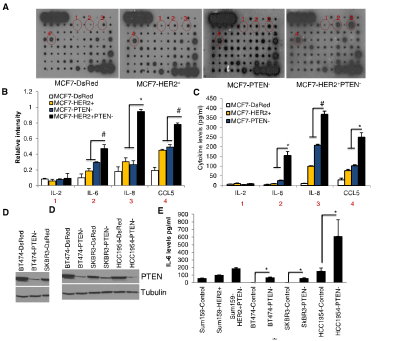
 Antiboy Array 5
Figure 3. PTEN Downregulation in HER2-Overexpressing Cells Activates an IL6/NF-kB-Mediated Inflammatory Feedback Loop (A–E) MCF7-HER2+PTEN cells secreted 3- to 5-fold higher levels of IL6, IL8, and CCL5 compared to MCF7-HER2+ or MCF7-PTEN cells as determined by RayBio human cytokine antibody Array 5 (A). The intensity of each blot compared to control was determined by Kodak image analyzer (B) and confirmed by ELISA (C). Downregulation of PTEN in HER2-amplified breast cancer cells, BT474, SKBR3, HCC1954, and Sum159-HER2+ (D) results in increased levels of these cytokines in vitro (E). http://dx.doi.org/10.1016/j.molcel.2012.06.014

Array Capabilities:
  • Detects expression of 96 secreted proteins in a single sample, in a single day. 
  • If you can do a Western, you can use a C-Series Antibody Array. And get excellent results the first time!  
  • Sandwich ELISA pairs give C-Series arrays high sensitivity and specificity.  
  • C-Series arrays are compatible with practically ANY liquid sample. 
References have cited using membrane-based C-Series Cytokine Antibody Arrays with nearly every liquid sample type imaginable, including: cell-cultured and co cell cultured media, cell and tissue lysates, tissue/organ perfusates, serum, plasma, urine, and many other body fluids, including cyst, interstitial, synovial, blister, cerebrospinal, prostatic and amniotic fluids, as well as abscesses, broncho-alveolar lavage, sputum, saliva, tears, breath condensates, and even human milk and colostrum. Publications referencing use of our Antibody Arrays.

I will be posting more new developments here.