Showing posts with label Transfection. Show all posts

Friday, October 23, 2020

Neuromics' n-Fect Delivers

 Gene Expression Tools in Action

Neuromics has a wide offering of transfection reagents that are perfect for both in vivo and in vitro applications. We take pride in seeing our product used in research, which is certainly true of our transfection reagents (see here).

Furthermore, we'd like to highlight a recent use of our n-Fect Transfection Kit (cat.# NF30150) in a doctoral thesis recently published. The paper looked into the neuroscience of alcohol addiction, looking towards the purinergic family receptor P2X4, which has been linked to alcohol addiction in mouse models. Using our n-Fect Transfection Kit, the molecular and cellular mechanisms linking P2X4 expression and voluntary alcohol consumption are explored. Our n-Fect reagents were used on brain slices containing the ventral tegmental area (VTA) of mice. They conclude that purinergic control of VTA neurons is a neurotransmitter system that should be further studied as a target for alcohol dependence drugs.

Image: Examples of p-Fect (Cat.# PF3000) transfection in different cell types.

Questions? Do not hesitate to contact Rose Ludescher, VP of customer satisfaction -rose@neuromics.com

Sunday, August 04, 2019

i-Fect Delivers circRNA and miRNA

Blocks Bone Cancer Pain
Altered expression of circular RNA (circRNA) is recognized as a contributor to malignant pain where microRNA (miRNA) exerts an essential effect. Researchers used our i-FectTMTransfection Kit to knock them down. Zhongqi Zhang, Xiaoxia Zhang, Yanjing Zhang, Jiyuan Li, Zumin Xing. Yiwen Zhang. Spinal circRNA-9119 Suppresses Nociception by Mediating the miR-26a-TLR3 Axis in a Bone Cancer Pain Mouse Model. Spinal circRNA-9119 Suppresses Nociception by Mediating the miR-26a-TLR3 Axis in a Bone Cancer Pain Mouse Model. Journal of Molecular Neuroscience. pp 1–10

Intrathecal Administration of miRNA and circRNA Pre-miRNA sequence of miR-26a and circ9119 were cloned into a plasmid. The i-Fect transfection reagent (10 μL; Neuromics, Edina, USA) was used to resuspend plasmids for injection.

Sample Data

Image: siRNA-mediated suppression of target gene expression in Schwann cells.
i-Fect Kits sell for 399 USD. They are widely used and frequently published. Check the out today.

Tuesday, January 31, 2017

Desperately Seeking Data

Answering the Bell
We continue to seek data using our cells. We offer a reward of 25 USD Starbucks' Gift Card.

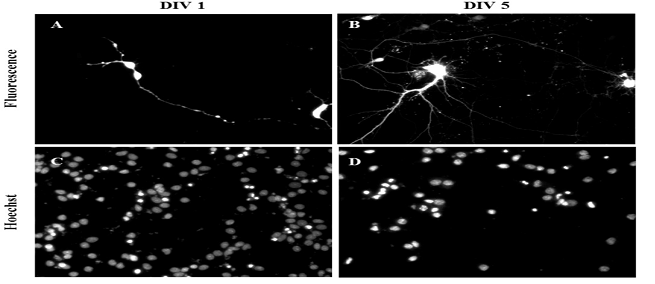
We were pleased to receive a recently published study from Dr. Mahendran Subramanian of Keele University. In this study, researchers showed that oscillating nanomagnetic gene transfection could be used to successfully transfect SH‐SY5Y cells as well as our primary hippocampal and cortical neurons on different days in vitro. This novel technique was used to effectively deliver genetic material into various cell types, resulting in high transfection efficiency and viability. Mahendran Subramanian, Aimee‐Jayne Tyler, Eva Maria Luther, Elena Di Daniel, Jenson Lim and Jon Dobson. Oscillating Magnet Array−Based Nanomagnetic Gene Transfection: A Valuable Tool for Molecular Neurobiology Studies. Nanomaterials 2017, 7, 28; doi:10.3390/nano7020028...Primary rat hippocampal and cortical neurons were obtained from Neuromics (Edina, MN, USA) and disassociated using papain disassociation kit (Worthington, NJ, USA) according to the manufacturer’s instructions. Isolated neurons were maintained using neurobasal medium supplemented with 5% FBS, 0.5 mM Glutamax, 2% B27 supplement, 25 μM L‐glutamine and seeded onto poly‐D‐lysine–coated cells culture plates...
Figure 1. Oscillating magnet array−based nanomagnetic gene transfection experimental setup. (A) Representation of a 96‐well oscillating magnet array–based nanomagnetic transfection setup using NdFeB magnetic array (nanotherics); (B) Dimensions of the permanent magnets and magnetostatic (vectorpotential) algorithm based magnetic field density |B| distribution (T) contour plot for the NdFeB magnetic array.

Figure 2. Gene delivery by oscillating nanomagnetic gene transfection in primary cortical neurons. Images of pmaxGFP plasmid expressed in primary neurons using fluorescence microscopy and its corresponding Hoechst 33,342 stained counterpart of transfected DIV 1 (A,C) and DIV 5 (B,D) mature neurons were taken 48 h post transfection.

If you have data to share email it to me, pshuster@neuromics.com and we'll email you a 25 USD gift card. Thank you. Pete Shuster, CEO & Owner.

Monday, June 30, 2008

Combined Neuron Cultures Assays

We would like to thank Dr. Matteo Porotto, Weill Cornell Medical College

Larger Image

Primary rat neurons: Transfection of functional HeV glycoproteins and infection with HeV pseudotyped virions.In order to establish the feasibility of carrying out the proposed experiments in primary neurons, we show (figure ) that our assays are amenable to use in primary neurons. In the experiment, Combined Hippocampus, Cortex, and Ventricular -E18 (Neuromics) were plated, and at 3 days were transfected with plasmids encoding HeV G/F as well as YFP. On the following day, these cells were infected with HeV or VSV pseudotyped viruses bearing RFP. In the figure, (A) the phase contrast photos show the differentiated neurons; (B) upon excitation for RFP, the red fluorescence indicates neurons infected by HeV pseudotyped virions; (C) upon excitation for YFP, and the green fluorescence shows the efficiency of transfection in neurons. This experiment indicates that the proposed experiments can be carried out in primary neurons, which are transfectable and infectable in our systems, and thus supports all the proposed aims. Data Courtesy of Dr. Matteo Porotto, Weill Cornell Medical College

Primary Neuron Cultures Featured
Combined Hippocampus, Cortex, and Ventricular -E18
Other Reagents to Consider
All Primary Neurons/Astrocytes, Stem Cells and Media
Transfection Reagents
Neuron-Glial Markers
Stem Cell Markers

Thursday, January 17, 2008

Nov-Dec Publication Referencing Neuromics

Diversity in the Neural Circuitry of Cold Sensing Revealed by Genetic Axonal Labeling of Transient Receptor Potential Melastatin 8 Neurons
CELLULAR/MOLECULAR:Yoshio Takashima, Richard L. Daniels, Wendy Knowlton, James Teng, Emily R. Liman, and David D. McKemyDiversity in the Neural Circuitry of Cold Sensing Revealed by Genetic Axonal Labeling of Transient Receptor Potential Melastatin 8 NeuronsJ. Neurosci., Dec 2007; 27: 14147 - 14157 ; doi:10.1523/JNEUROSCI.4578-07.2007 ......211; Santa Cruz Biotechnology, Santa Cruz, CA), 1:500 rabbit anti-transient receptor potential vanilloid 1 (TRPV1; RA14113; Neuromics, Edina, MN), and 1:500 rabbit anti-TRPM8 (a gift from M. Tominaga, Okazaki Institute for Integrative Bioscience, Okazaki......
Abstract
Full Text
PDF
Supplemental Data
G 5 Is Required for Normal Light Responses and Morphology of Retinal ON-Bipolar Cells
BRIEF COMMUNICATIONS:Anjali Rao, Rebecca Dallman, Scott Henderson, and Ching-Kang ChenGβ5 Is Required for Normal Light Responses and Morphology of Retinal ON-Bipolar CellsJ. Neurosci., Dec 2007; 27: 14199 - 14204 ; doi:10.1523/JNEUROSCI.4934-07.2007 ......2003) 1:100 RGS6 Imgenex (San Diego, CA) 1:100 Goalpha Millipore (Billerica, MA) 1:100 mGluR6 Neuromics (Northfield, MN) 1:100 PKCalpha Sigma 1:100 FLAG Sigma 1:100 Transmission electron microscopy......
Abstract
Full Text
PDF
Exogenous Delivery of Heat Shock Protein 70 Increases Lifespan in a Mouse Model of Amyotrophic Lateral Sclerosis
NEUROBIOLOGY OF DISEASE:David J. Gifondorwa, Mac B. Robinson, Crystal D. Hayes, Anna R. Taylor, David M. Prevette, Ronald W. Oppenheim, James Caress, and Carolanne E. MilliganExogenous Delivery of Heat Shock Protein 70 Increases Lifespan in a Mouse Model of Amyotrophic Lateral SclerosisJ. Neurosci., Nov 2007; 27: 13173 - 13180 ; doi:10.1523/JNEUROSCI.4057-07.2007 ......overnight, at 4C. The primary antibodies used for glial cell activation were glial fibrillary acidic protein (GFAP; RA22101; Neuromics, Minneapolis, MN) and ionized calcium binding adaptor molecule 1 (Iba1; 016-20001; Wako, Neuss, Germany). The primary antibody......
Abstract
Full Text
PDF
Modulation of Semaphorin3A Activity by p75 Neurotrophin Receptor Influences Peripheral Axon Patterning
DEVELOPMENT/PLASTICITY/REPAIR:Ayal Ben-Zvi, Liat Ben-Gigi, Hagit Klein, and Oded BeharModulation of Semaphorin3A Activity by p75 Neurotrophin Receptor Influences Peripheral Axon PatterningJ. Neurosci., Nov 2007; 27: 13000 - 13011 ; doi:10.1523/JNEUROSCI.3373-07.2007 ......domain) used in Western blot analyses was purchased from Alamone Labs (Jerusalem, Israel). Anti-Neuropilin1 was purchased from Neuromics (Edina, MN). Secondary antibodies were obtained from Jackson Immunoresearch Laboratories (Jackson, PA). Protease inhibitor......
Abstract
Full Text
PDF
Supplemental Data
Somatostatin Peptides Produce Multiple Effects on Gating Properties of Native Cone Photoreceptor cGMP-Gated Channels That Depend on Circadian Phase and Previous Illumination
CELLULAR/MOLECULAR:Shih-Kuo Chen, Gladys Y.-P. Ko, and Stuart E. DryerSomatostatin Peptides Produce Multiple Effects on Gating Properties of Native Cone Photoreceptor cGMP-Gated Channels That Depend on Circadian Phase and Previous IlluminationJ. Neurosci., Nov 2007; 27: 12168 - 12175 ; doi:10.1523/JNEUROSCI.3541-07.2007 ......into the plasma membrane, and this can be monitored to infer activation of PLC. Transfection was performed using pn-Fect from Neuromics (Edina, MN). Briefly, retinal cells were grown for 4 d in LD cycles, until 24 h before analysis. At that time, coverslips......