Showing posts with label P2X3 Antibody. Show all posts

Thursday, May 27, 2021

Trigeminal Neuralgia (Facial Pain)

 Markers for Pain Research

Trigeminal Neuralgia is a progress chronic condition. Dysfunctional trigeminal signaling can lead to intense, searing facial pain. It is caused by pressure on the trigeminal nerve.

The root causes of the condition are not well understood. Our pain research markers have been widely used and frequently published through the years and have been important contributors to our growth, Here's a recent pub referencing use of one our P2X3 Antibodies-Momoko Koizumi, Sayaka Asano, Akihiko Furukawa, Yoshinori Hayashi, Suzuro Hitomi, Ikuko Shibuta, Katsuhiko Hayashi, Fusao Kato, Koichi Iwata, and Masamichi Shinoda. (2021). P2X3 Receptor Upregulation in Trigeminal Ganglion Neurons Through TNFα Production in Macrophages Contributes to Trigeminal Neuropathic Pain in Rats. The Journal of Headache and Pain, 22, 31. doi: 10.1186/s10194-021-01244-4

Images: Changes in P2X3R expression in TG neurons innervating whisker pad skin and the involvement of P2X3R signaling in TG neurons in orofacial mechanical hypersensitivity on day 7 following TNC. a Photomicrograph of FG-labeled P2X3IR TG neurons following the TNC or sham procedure. Arrows indicate FG-labeled P2X3IR TG neurons. Scale bar: 100 μm. b Mean number of FG-labeled TG neurons ipsilateral to the TNC or sham procedure (n = 5 in each). c The frequency of FG-labeled P2X3-IR TG neurons ipsilateral to the TNC or sham procedure. * p < 0.05 vs. sham. (n = 5 in each, student’s t-test). d The time course of changes in the MHWT by subcutaneous A317491 or TNP-ATP administration on day 7 following the TNC or sham procedure.


The signaling of TNFα released from the activated macrophages and infiltrated into and/or proliferated in the TG induces the upregulation of P2X3R expression in TG neurons innervating the orofacial region, resulting in orofacial mechanical allodynia following TNC. Consequently, TG neuronal P2X3R hyperexpression by enhanced TNFα signaling in the TG is a potential target for TN treatment..

Saturday, October 12, 2013

P2X3 Receptor and Inflammatory Nociception

P2X3 Activates TRPA1, 5-HT3 and 5-HT1A Receptors

Endogenous ATP via activation of P2X3 Receptors contributes to inflammatory nociception in different models, including the formalin injected in subcutaneous tissue of the rat's hind paw. In this study, researchers evaluated whether TRPA1, 5-HT3 and 5-HT1A receptors, whose activation is essential to formalin-induced inflammatory nociception, are involved in the nociception induced by activation of P2X3 receptors on subcutaneous tissue of the rat's hind paw: Suzy Krimon, Dionéia Araldi, Filipe César do Prado, Cláudia Herrera Tambeli, Maria Cláudia G. Oliveira-Fusaro, Carlos Amílcar Parada. P2X3 receptors induced inflammatory nociception modulated by TRPA1, 5-HT3 and 5-HT1A receptors. Pharmacology Biochemistry and Behavior, Available online 8 October 2013. http://dx.doi.org/10.1016/j.pbb.2013.09.017. Our widely used and frequently published P2X3 R Antibody places a central role in measuring the expression of the protein...containing 5% non-fat dry milk at room temperature, followed by incubation with P2X3 rabbit polyclonal antibody (1:500; Neuromics) overnight at 4 °C, rinsed six times with TBST, and then incubated for 40 minutes in goat anti-rabbit IgG peroxidase...
Image: Neuromics' P2X3 R WB Example: Sequence‐specific siRNA‐mediated repression of P2X3. (A) P2X3 mRNA inhibition by 200 nM siRNA duplexes. Twenty‐four hours after transfection of CHO‐rP2X3 cells, P2X3‐specific mRNA was measured with Q‐PCR and plotted as percentage of mRNA detected in the control treated with Oligofectamine alone. Sequences and modifications are shown in Figure 1B and Table 1. (B) P2X3 protein reduction by 200 nM siRNA‐8646/8647, but not by its mismatch analogue siRNA‐MM‐7558/7559 or the unrelated siRNA‐7126/7127. Twenty‐four hours after transfection, protein was extracted and analysed by western blotting. P2X3‐specific immunodetection reveals expression levels as shown below (an average value from two experiments). Time points as indicated at the top. Molecular weights of two glycosylated forms of P2X3 are shown on the left. 

Conclusions: Nociceptive response intensity was measured by observing the rat's behavior and considering the number of times the animal reflexively raised its hind paw (flinches) in 60 min. Local subcutaneous administration of the selective TRPA1, 5-HT3 or 5-HT1A receptor antagonists HC 030031, tropisetron and WAY 100,135, respectively, prevented the nociceptive responses induced by the administration in the same site of the non-selective P2X3 receptor agonist αβmeATP. Administration of the selective P2X3 and P2X2/3 receptor antagonist A-317491 or pretreatment with oligonucleotides antisense against P2X3 receptor prevented the formalin-induced behavioral nociceptive responses during the first and second phases. Also, the co-administration of a subthreshold dose of αβmeATP with a subthreshold dose of formalin induced nociceptive behavior, which was prevented by local administration of tropisetron, HC 030031 or WAY 100, 135. These findings have demonstrated that the activation of P2X3 receptors induces inflammatory nociception modulated by TRPA1, 5-HT3 and 5-HT1A receptors. Also, they suggest that inflammatory nociception is modulated by the release of endogenous ATP and P2X3 receptor activation, which in turn, increases primary afferent nociceptor susceptibility to the action of inflammatory mediators via interaction with TRPA1, 5-HT3 and 5-HT1A receptors in the peripheral tissue.

I will continue to post pain and inflammation related studies that reference the use of our antibodies.

Sunday, April 14, 2013

P2X3 Receptors and Migraine

P2X3 Receptors of Trigeminal Sensory Neurons and Familial Hemiplegic Migraine Type 1 (FHM-1).

Our P2X Receptor Markers continue to be used in interesting and novel ways. Here researchers use our P2X3 Receptor Antibody to study expression using primary rat ganlia cultures: Swathi K. Hullugundi,Michel D. Ferrari, Arn M. J. M. van den Maagdenberg, Andrea Nistri. Andrea Nistri. The Mechanism of Functional Up-Regulation of P2X3 Receptors of Trigeminal Sensory Neurons in a Genetic Mouse Model of Familial Hemiplegic Migraine Type 1 (FHM-1). PLoS ONE 8(4): e60677. doi:10.1371/journal.pone.0060677

Abstract: A knock-in (KI) mouse model of FHM-1 expressing the R192Q missense mutation of the Cacna1a gene coding for the α1 subunit of CaV2.1 channels shows, at the level of the trigeminal ganglion, selective functional up-regulation of ATP -gated P2X3 receptors of sensory neurons that convey nociceptive signals to the brainstem. Why P2X3 receptors are constitutively more responsive, however, remains unclear as their membrane expression and TRPV1 nociceptor activity are the same as in wildtype (WT) neurons. Using primary cultures of WT or KI trigeminal ganglia, we investigated whether soluble compounds that may contribute to initiating (or maintaining) migraine attacks, such as TNFα, CGRP, and BDNF, might be responsible for increasing P2X3 receptor responses. Exogenous application of TNFα potentiated P2X3 receptor-mediated currents of WT but not of KI neurons, most of which expressed both the P2X3 receptor and the TNFα receptor TNFR2. However, sustained TNFα neutralization failed to change WT or KI P2X3 receptor currents. This suggests that endogenous TNFα does not regulate P2X3 receptor responses. Nonetheless, on cultures made from both genotypes, exogenous TNFα enhanced TRPV1 receptor-mediated currents expressed by a few neurons, suggesting transient amplification of TRPV1 nociceptor responses. CGRP increased P2X3 receptor currents only in WT cultures, although prolonged CGRP receptor antagonism or BDNF neutralization reduced KI currents to WT levels. Our data suggest that, in KI trigeminal ganglion cultures, constitutive up-regulation of P2X3 receptors probably is already maximal and is apparently contributed by basal CGRP and BDNF levels, thereby rendering these neurons more responsive to extracellular ATP.

Images: Examples of TNFR2 and P2X3 co-exexpression in (wildtype) WT and R192Q (knockin) KI neurons. Left panel shows P2X3 expression (green), and right panel shows TNFR2 staining (red). B, Histograms quantifying % of cells co-expressing TNFR2 and P2X3: both WT and KI cultures show similar TNFR2 and P2X3 co-expression. N = 3 independent experiments (6 mice). C, Representative traces of currents induced by application of α,β-meATP (10 µM, 2 s) to WT or R192Q KI neurons in control conditions or after 4 h TNFα application. D, Histograms show average peak amplitudes of P2X3 receptor-mediated currents: WT control (open bar), n = 30; WT TNFα (stippled bar), n = 38; KI control (grey bar), n = 34; KI TNFα (stippled gray bar), n = 34; ** = p<0 .006="" i="" nbsp="" p="">doi:10.1371/journal.pone.0060677.g001.

Understanding the interplay between TNFR2 and P2X3 could lead to a better understanding of the root causes of migraines. This could open up yet more potential drug targets for this insidious condition.

Check out these related reagent categories:
All Purinergic Receptor Antibodies
Pain and Inflammation Research Antibodies 
Neurotransmission Research Antibodies
Primary Neurons and Astrocytes-Primary human, rat and mouse neurons and astrocytes

Sunday, January 27, 2013

Epidermal Nerve Fibers in Neuropathic Pain Model

Re-innervation in spared nerve injury (SNI) vs normal rats
Neuromics' Pain and Inflammation Research Antibodies are frequently used to help researchers find root causes of neuropathic pain. This is a fascinating study of re-innervation patterns of epidermal and dermal nerve fibers in a rat neuropathic pain model (Note: our Guinea Pig Polyclonal P2X3 Antibody was used in this study): Liron S. Durakua, Mehdi Hossaini, Barthold N. Schüttenhelm, b, Joan C. Holstege, Martijn Baas, Tom J.H. Ruigrok, Erik T. Walbeehm. Re-innervation patterns by peptidergic Substance-P, non-peptidergic P2X3, and myelinated NF-200 nerve fibers in epidermis and dermis of rats with neuropathic pain. Experimental Neurology Volume 241, March 2013, Pages 13–24. doi.org/10.1016/j.expneurol.2012.11.029.
Non-footpad area vs. footpad.The distribution pattern between the center non-footpad area and footpad is compared for the different subgroups of sensory skin fibers. For epidermal Sub P-IR and upper dermal NF-200-IR fibers there is an equal density of fibers in the center and footpad area suggesting a homogenous distribution over the foot sole of a rat. Whereas for epidermal P2X3-IR fibers there is a significant lower number of P2X3-IR fibers in the footpads as compared to the center non-footpad area, suggesting a heterogeneous distribution in the foot sole for this type of sensory fibers. N = 5 per group. Unpaired t-test. ***: p < 0,001. Scale bar: 250 μm. doi.org/10.1016/j.expneurol.2012.11.029

Illustration of the skin innervation in normal and SNI situation.Illustration showing the innervation pattern of subgroups of sensory skin fibers in the normal situation and in the SNI model 10 weeks PO. In the naïve animals the peptidergic CGRP and non-peptidergic P2X3 fibers have a lower density in the footpads as compared to the non-footpad areas, while the Substance P and NF-200 fibers have an equal distribution over the complete foot sole. In the SNI model there is a significant increase of CGRP epidermal fibers in the medial and lateral area of the foot sole and there is a complete re-innervation of the center area. In addition the footpads in the SNI model are hyper-innervated with CGRP fibers. Substance P and P2X3 and NF-200 fibers show no increased density in the uninjured medial and lateral area after 10 weeks PO. In addition, Substance P and P2X3 fibers hardly re-innervate the center area; however, the NF-200 fibers have the same density of fibers in the denervated area as in the normal situation. In the SNI model the medial, center and lateral area have all an increase in LC's, with the center area being the most prominent one. In addition the epidermis thickness of the SNI model has decreased significantly in all the three areas after 10 weeks PO.
Related Postings: http://neuromics.blogspot.com/search/label/Neuropathic%20Pain.

Thursday, January 10, 2013

Pain and the Interplay Between P2Y Receptors with P2X3

P2Y2-P2X3 crosstalk in DRG neurons

Alfredo Ribeiro-da-Silva and his team use our Purinergic Receptor Antibodies to the study role of their expression in Nociceptive and Neuropathic Pain. They referenced their use in 8 publications.

Based on their research, they suspect changes in P2X3 function under pathological conditions are more complex than simple up- or down-regulation of expression at the protein level. This would have profound implications for the dicovery of drugs that target P2X3 expression levels: Gary Mo, Jennifer C. Peleshok, Chang-Qing Cao, Alfredo Ribeiro-da-Silva and Philippe Séguéla. Control of P2X3 channel function by metabotropic P2Y2 UTP receptors in primary sensory neurons. Molecular Pharmacology Fast Forward. Published on December 18, 2012 as doi:10.1124/mol.112.082099.
Images: P2X3 and P2Y2 receptors are co-expressed in rat DRG sensory neurons.(A) DRG sections labeled for P2Y2 (green) and P2X3 (red) and merged (yellow). P2Y2 immunoreactivity is broadly distributed in small-diameter neuronal somata and co-localized with P2X3 (arrows). P2Y2 immunoreactivity can be detected in cells negative for P2X3 (arrow heads). (B) P2Y2 (green) and P2X3 (red) are also colocalized (yellow) in peripheral nerve fibers.
The two receptors were found to be colocalized both in cell bodies and nerve fibers, indicating co-trafficking to peripheral and central terminals. The immunolocalization evidence presented here provides valuable information on the physiological relevance of crosstalks between ionotropic and metabotropic ATP receptors in sensory pathways, yet much work is still needed to fully comprehend the role of nucleotide signaling in pain, especially in pathological conditions. Changes in P2Y2 receptor expression in response to inflammation have been documented (Malin et al., 2008), therefore it will be worth investigating the functional impact of P2Y2-P2X3 interactions on ATP signaling under chronic pain conditions.

I will keep you posted on any new developments.

Sunday, December 16, 2012

P2X Receptor Markers-Pubs Update

2012 has been a record year for publications referencing use of our Purinergic Receptor Antibodies. These publications demonstrate use of these markers in a variety of assays and applications. Examples range from analysis of P2X2 expression in human bladder epithelial cells to showing P2X3 expressing nerve fiber boutons in rat horizontal spinal cord sections by immunofluorescence and much more.

Here's a summary of publications: F.C. Pradoa, D. Araldia, A.S. Vieiraa, M.C.G. Oliveira-Fusarob, C.H. Tambelia, C.A. Parada. Neuronal P2X3 receptor activation is essential to the hyperalgesia induced by prostaglandins and sympathomimetic amines released during inflammation. http://dx.doi.org/10.1016/j.neuropharm.2012.11.011. non-fat dry milk at room temperature, followed by incubation with P2X3 or PKCɛ rabbit polyclonal antibody (1:500; Neuromics) overnight at 4 °C, rinsed six times with TBST, and then incubated for 40 min in goat anti-rabbit IgG peroxidase conjugate...

Min Liu, PhD, MD, Yun-fei Xu, PhD, MD, Yuan Feng, PhD, MD, Fengqiang Yang, MD, Jun Luo, MD, Wei Zhai, PhD, MD, Jian-ping Che, MD, Guang-chun Wang, MD, Jun-hua Zheng, PhD. Epigallocatechin gallate attenuates interstitial cystitis in human bladder urothelium cells by modulating purinergic receptors. Journal of Surgical Research. http://dx.doi.org/10.1016/j.jss.2012.11.041
...P2X2 (Neuromics, Northfield, MN)...

Abeer W Saeed, Alfredo Ribeiro-da-Silva. Non-peptidergic primary afferents are presynaptic to neurokinin-1 receptor immunoreactive lamina I projection neurons in rat spinal cord. Molecular Pain 2012, 8:64 doi:10.1186/1744-8069-8-64Anna M.W. Taylora, Maria Osikowicza, Alfredo Ribeiro-da-Silva. Consequences of the ablation of nonpeptidergic afferents in an animal model of trigeminal neuropathic pain. PAIN. Volume 153, Issue 6, June 2012, Pages 1311–1319. http://dx.doi.org/10.1016/j.pain.2012.03.023.
Confocal images at high power obtained from horizontal spinal cord sections. In a confocal optical section from lamina I adjacent to the white matter (A), note the relatively abundant P2X3-IR fibers with varicosities (boutons). CGRP-IR fibers and boutons were considerably more abundant in this lamina. In a confocal optical section from inner lamina II (B), note the very high density of P2X3-IR fibers and varicosities, higher than that of CGRP-IR fibers in lamina I. Note that most varicosities display either P2X3 or CGRP immunoreactivity, although some co-localization is observed (yellow). Scale bar (A, B) = 20 μm.
T. Cho, V. V. Chaban. Interaction Between P2X3 and Oestrogen Receptor (ER)α/ERβ in ATP-Mediated Calcium Signalling In Mice Sensory Neurones. Journal of Neuroendocrinology Volume 24, Issue 5, pages 789–797, May 2012...with polyclonal rabbit antibody against P2X3 receptor (dilution 1 : 1000; Neuromics)...

Anna M.W. Taylora, Maria Osikowicza, Alfredo Ribeiro-da-Silva. Consequences of the ablation of nonpeptidergic afferents in an animal model of trigeminal neuropathic pain. PAIN. Volume 153, Issue 6, June 2012, Pages 1311–1319. doi.org/10.1016/j.pain.2012.03.023...Sections were then incubated for 48 hours at 4°C with a guinea pig polyclonal anti-P2X3 antibody (1:25,000; Neuromics, Edina, MN, USA), diluted in PBS-T. Following primary antibody incubation, sections were treated with a biotin-conjugated...

Ji Z-G , Ito S , Honjoh T , Ohta H , Ishizuka T , et al. 2012 Light-evoked Somatosensory Perception of Transgenic Rats That Express Channelrhodopsin-2 in Dorsal Root Ganglion Cells. PLoS ONE 7(3): e32699...guinea-pig anti-P2X3 (1:1,000, GP10108, Neuromics, Edina, MN, USA)...
Distribution of ChR2V in the dorsal part of the spinal cord. A–C. Immunohistochemical localization of ChR2V with the cell-type specific markers, NF200 (A), CGRP (B) or P2X3 (C). Scale bars indicate 40 µm. doi:10.1371/journal.pone.0032699.g003.

I will continue to post new publications and data in the coming year. Stay tuned. 

Sunday, October 21, 2012

P2X3 Receptor and CGRP Antibodies Immunostaining

Dr. Alfredo Ribeiro-da-Silva, McGill University, is a serial publisher of studies using our pain and inflammation research antibodies.

Here, use of our rabbit anti-CGRP and guinea pig anti-P2X3 is referenced. Please note the high titer of these antibodies (dilution is 1:25,000): Abeer W Saeed, Alfredo Ribeiro-da-Silva. Non-peptidergic primary afferents are presynaptic to neurokinin-1 receptor immunoreactive lamina I projection neurons in rat spinal cord. Molecular Pain 2012, 8:64 doi:10.1186/1744-8069-8-64.


Images: CGRP, IB4 and P2X3 staining in transverse spinal cord sections. A and B show low magnification confocal images of CGRP-IR and IB4 positive (A) or P2X3-IR (B) fibers. C and D represent high magnification confocal images from the middle third of the lateromedial extent of the superficial dorsal horn. In C, note that there is limited co-localization of IB4 and CGRP (in yellow). Arrowheads show axonal varicosities (boutons) from nonpeptidergic fibers in lamina I, which do not co-localize CGRP immunoreactivity. The framed regions in A and B indicate the approximate regions from where C and D, respectively, were obtained (the latter originate from other sections). CGRP (in green); IB4 (in red); P2X3 (in red). Scale bar (A, B) = 200 μm; scale bar (C, D) = 20 μm

Tissue processing: The injection site at the level of the parabrachial nucleus was examined by cutting serial, 100 μm-thick coronal sections of the relevant brain region. The dorsal aspect of the L4-L5 spinal cord segment was cut into serial, 50 μm-thick horizontal sections (n = 10), 50 μm-thick parasagittal sections (n = 4) or 50 μm-thick transverse sections (n = 4). All sections were cut using a freezing sledge microtome (Leica, Richmond Hill, Ontario) and collected as freefloating in phosphate-buffered saline (PBS) with 0.2% Triton-X 100 (PBS + T). To block unspecific staining, all spinal cord sections were incubated, for one hour, in 10% normal donkey serum (NDS) (Jackson, West Grove, PA) in PBS + T at room temperature. Subsequently, the sections were placed in primary antibodies (or conjugated lectin IB4 - see below) for 48 hours at 4 °C. We used a mixture of 2 or 4 primary antibodies (each raised in a different species), or IB4, in PBS + T containing 5% NDS. Next, the sections were washed in PBS + T and then incubated in species-specific secondary antibodies that were raised in donkey and conjugated to either AlexaFluor 488, AlexaFluor 405, Rhodamine RedX or biotin. The sections were incubated in 3 different cocktails: #1) rabbit anti-CGRP at a 1:200 dilution (Sigma, St Louis, MO) and lectin IB4 conjugated to AlexaFluor 568 at a 1:200 dilution (Molecular Probes); #2) rabbit anti-CGRP and guinea pig anti-P2X3 at a 1:25,000 dilution (Neuromics, Edina, MN); #3) goat anti-CTb at a 1:5000 dilution (List Biological), rabbit anti-NK-1r at a 1:10000 dilution (Sigma, St Louis, MO), guinea pig anti-CGRP at a 1:8000 dilution (Peninsula, San Carlos, CA) and lectin IB4 conjugated to AlexaFluor 647 at a 1:200 dilution (Molecular Probes). All the sections were washed with PBS + T and then (for #1) incubated for 2 hours at room temperature with donkey anti-rabbit AlexaFluor 488; (for #2) incubated for 90 minutes in a biotin conjugated donkey anti-guinea pig IgG (Jackson Immunoresearch, West Grove, PA, 1:200). Further signal amplification was achieved by treating the sections with 1 hour incubation in an avidin-biotin (A + B) complex (Vectastain Elite ABC kit, Vector Laboratories) followed by tyramide (Perkin-Elmer, Norwalk, CT, 1:75) for 7 minutes. Sections were then incubated in streptavidin conjugated to AlexaFluor 568 (Molecular Probes, Eugene, OR, 1:200) and donkey anti-rabbit AlexaFluor 488; or (for #3) incubated for 2 hours at room temperature with secondary antibodies: donkey anti-goat Rhodamine Red X, donkey anti-rabbit AlexaFluor 488, and donkey anti-guinea pig AlexaFluor 405. Finally, sections were washed with PBS, mounted on gelatin-subbed slides and coverslipped with an anti-fading mounting medium (Aqua Polymount; Polysciences, Warrington, PA). Slides were stored at −4 °C pending further processing.

I will continue to publish outstanding customer data/images using our natibodies/markers.

Saturday, July 21, 2012

Converting Human Pluripotent Stem Cells into Nociceptors

Methods for differentiating induced pluripotent stem cells (iPSCs) into specific cell types are a requirement for converting the "promise of iPSCs" into reality. The knowledge derived from this research can be leveraged for high throughput  Drug Discovery and ultimately the development of therapies. I am excited to highlight results recently published by Dr. Lorenz Studer and his team at Memorial Sloan-Ketterling: Stuart M Chambers, Yuchen Qi, Yvonne Mica, Gabsang Lee, Xin-Jun Zhang, Lei Niu, James Bilsland, Lishuang Cao, Edward Stevens, Paul Whiting, Song-Hai Shi, Lorenz Studer. Combined small-molecule inhibition accelerates developmental timing and converts human pluripotent stem cells into nociceptors. Nature Biotechnology 30, 715–720 (2012) doi:10.1038/nbt.2249.

Abstract: Considerable progress has been made in identifying signaling pathways that direct the differentiation of human pluripotent stem cells (hPSCs) into specialized cell types, including neurons. However, differentiation of hPSCs with extrinsic factors is a slow, step-wise process, mimicking the protracted timing of human development. Using a small-molecule screen, we identified a combination of five small-molecule pathway inhibitors that yield hPSC-derived neurons at >75% efficiency within 10 d of differentiation. The resulting neurons express canonical markers and functional properties of human nociceptors, including tetrodotoxin (TTX)-resistant, SCN10A-dependent sodium currents and response to nociceptive stimuli such as ATP and capsaicin. Neuronal fate acquisition occurs about threefold faster than during in vivo development(1), suggesting that use of small-molecule pathway inhibitors could become a general strategy for accelerating developmental timing in vitro. The quick and high-efficiency derivation of nociceptors offers unprecedented access to this medically relevant cell type for studies of human pain

Figure – LSB3i Differentiation model. Early LSB inhibits trophectoderm, mesendoderm, and non-neural ectoderm cell fates yielding neuroectoderm. CHIR99021, SU5402 and DAPT induce and accelerate neural crest stem cell identity by day 8 and promote rapid differentiation of the neural crest stem cells to nociceptors expressing peptidergic markers by day 10.
Note: Neuromics' TRPV1 Antibody was used as a marker for mature nociceptors.

Check out Supplementary Data for more. I will continue to post links to methods here and @ Neuromics' Stem Cell Research Reagents.

Thursday, May 17, 2012

Pinpointing Neuropathic Pain

I am pleased to feature our Guinea Pig P2X3 Antibody as a tool for studying the root causes of Neuropathic Pain.

In this study, the authors showed ablation of nonpeptidergic fibers in a chronic constriction injury model caused significant sympathetic and parasympathetic P2X3 fiber sprouting, and led to an exacerbated pain response. This was an unexpected finding, as it has been suggested that nonpeptidergic fibers play a major role in mechanical pain, and suggests that these fibers play a complex role in the development of neuropathic pain: Anna M.W. Taylora, Maria Osikowicza, Alfredo Ribeiro-da-Silva. Consequences of the ablation of nonpeptidergic afferents in an animal model of trigeminal neuropathic pain. PAIN. Volume 153, Issue 6, June 2012, Pages 1311–1319. doi.org/10.1016/j.pain.2012.03.023....Sections were then incubated for 48 hours at 4°C with a guinea pig polyclonal anti-P2X 3 antibody (1:25,000; Neuromics, Edina, MN, USA), diluted in PBS-T. Following primary antibody incubation, sections were treated with a biotin-conjugated...

Image: Example of  Non-petidergic fibers expressing P2X3 receptor for ATP are present in lamina II of the contralateral dorsal horn (arrows). The P2X3-positive fibers are eliminated from the rat dorsal horn ipsilateral to the rhizotomy (arrow heads). Spinal cord segment C6. Scale bar 400 um. P2X3 antibody dilution 1:25,000. Biomédica vol.24 no.2.

Check out our related reagents categories:
 I will continue to post important findings related to the root causes of Neuropathic Pain.


Thursday, March 08, 2012

P2X3 Receptors and Cool Science

Our P2X3 Receptor Antibodies are widely used and frequently published. This publication references use of our P2X3 Guinea Pig Antibody.

I like the "cool factor" in this study: Ji Z-G , Ito S , Honjoh T , Ohta H , Ishizuka T , et al. 2012 Light-evoked Somatosensory Perception of Transgenic Rats That Express Channelrhodopsin-2 in Dorsal Root Ganglion Cells. PLoS ONE 7(3): e32699. doi:10.1371/journal.pone.0032699.-"We have recently generated several transgenic lines of rat in which channelrhodopsin-2 (ChR2) transgene is driven by the Thy-1.2 promoter. In one of them, W-TChR2V4, some neurons were endowed with photosensitivity by the introduction of the ChR2 gene, coding an algal photoreceptor molecule. The DRG neurons expressing ChR2 were immunohistochemically identified using specific antibodies to the markers of mechanoreceptive or nociceptive neurons. Their peripheral nerve endings in the plantar skin as well as the central endings in the spinal cord were also examined. We identified that ChR2 is expressed in a certain population of large neurons in the DRG of W-TChR2V4. On the basis of their morphology and molecular markers, these neurons were classified as mechanoreceptive but not nociceptive. ChR2 was also distributed in their peripheral sensory nerve endings, some of which were closely associated with CK20-positive cells to form Merkel cell-neurite complexes or with S-100-positive cells to form structures like Meissner's corpuscles. These nerve endings are thus suggested to be involved in the sensing of touch. Each W-TChR2V4 rat showed a sensory-evoked behavior in response to blue LED flashes on the plantar skin. It is thus suggested that each rat acquired an unusual sensory modality of sensing blue light through the skin as touch-pressure. This light-evoked somatosensory perception should facilitate study of how the complex tactile sense emerges in the brain."

The researchers used Blue LED light to fire neurons involved somatosensory or tactile response!


Images. Distribution of ChR2V in the dorsal part of the spinal cord. A–C. Immunohistochemical localizationof ChR2V with the cell-type specific markers, NF200 (A), CGRP (B) or P2X3 (C). Scale bars indicate 40 µm.

Note that the receptors involved in Nociceptive Pain Sensing do not overlap with ChR2V. From this the authors conclude that ChR2V is involved in mechanoreception. This rat model should facilitate future study of how complex tactile perception, such as for texture, size and shape, is generated. We will keep you posted.

In the meantime check out our markers and antibodies for studying Neurotransmission and Synaptic Mechanisms.

Wednesday, February 15, 2012

Guinea Pig P2X3 Antibody-It's Back!

Our Guinea Pig P2X3 Antibody has historically been one of our most popular Purinergic Receptor Antibodies. It has been frequently cited in publications.

We exhausted our supply of the antibody in the spring of 2011 and it took us many rounds with multiple partners and a degree of disappointing results. Well our efforts have finally yielded the positive testing results required to again provide users this important antibody. Here're related images from our internal testing:
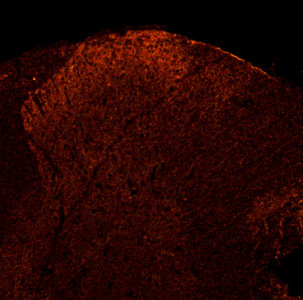
P2X3 staining in rat Dorsal Root Ganglia.
P2X3 in rat Dorsal Horn.
Check out our Purinergic Receptor Antibodies today.


Monday, September 19, 2011

Immune-Inflammatory Response and Pain Research

Our Pain and Inflammation Related Research Antibodies are increasingly being used to study the root causes of immune/inflammatory related pain induction. Here're related publications: Lintao Qu, Pu Zhang, Robert H. LaMotte, Chao Ma. Neuronal Fc-gamma receptor I mediated excitatory effects of IgG immune complex on rat dorsal root ganglion neurons. Brain, Behavior, and Immunity. Volume 25, Issue 7, October 2011, Pages 1399-1407......rabbit-anti-TRPV1, 1:1000, Neuromics...

Highlights: Pain often accompanies antigen-specific immune-related disorders though little is known of the underlying neural mechanisms. A common feature among these disorders is the elevated level of antigen-specific immunoglobulin (Ig) G in the serum and the presence of IgG immune complex (IC) in the affected tissue. We hypothesize that IC may directly activate the Fc-gamma receptor type I (FcγRI) expressed in nociceptive dorsal root ganglion (DRG) neurons and increase neuronal excitability thus potentially contributing to pain. Immunofluorescent labeling indicated that FcγRI, but not FcγRIIB or FcγRIII, was expressed in a subpopulation of rat DRG neurons including those expressing nociceptive markers. Calcium imaging revealed that the IC, but neither of the antibody (IgG) or antigen alone, produced an increase in intracellular calcium. This effect was abolished by the removal of the IgG Fc portion in the IC or the application of an anti-FcγRI antibody, suggesting a key role of the FcγRI receptor. Removal of extracellular calcium or depletion of intracellular calcium stores prevented the IC-induced calcium response. In whole-cell current-clamp recordings, IC depolarized the resting membrane potential, decreased the rheobase, and increased the number of action potentials evoked by a depolarizing current at 2× rheobase. In about half of the responsive neurons, IC evoked action potential discharges. These results suggest that a subpopulation of nociceptive neurons expresses functional FcγRI and that the activation of this receptor by IC increases neuronal excitability.

B. Huanga, X. Zhaoc, L.-B. Zhengb, L. Zhanga, B. Nia. Different expression of tissue inhibitor of metalloproteinase family members in rat dorsal root ganglia and their changes after peripheral nerve injury. Neuroscience, Volume 193, 13 October 2011, Pages 421-428....anti-P2X3 (rabbit, Neuromics, MN, USA)...

Wednesday, July 06, 2011

Guinea Pig P2X3 Update-Good News

I have had to say to many customers, "our guinea pig P2x3 is on backorder". The increasing number of pubs referencing this antibody only amped demand.

We tried and tried to re-make it. The result was none of the bleeds we tested had a signal strong enough to release the antibody. We had a customer suggest re-testing several of the more promising bleeds. Thank you! We have good news on results and we are offering for 50% off. This is to acknowledge the investment required for TSA and Guinea Pig Biotinylated Antibody.


Here're the recent pubs I referenced:

Gabriela Castañeda-Corral, Héctor I. Rocha-González, Beatriz Godínez-Chaparro, Juan Miguel Jiménez-Andrade and Vinicio Granados-Soto. Role of the spinal Na+/H+ exchanger in formalin-induced nociception. Neuroscience Letters. doi:10.1016/j.neulet.2011.06.048....SP (guinea pig; 1:500; Cat# GP14110; Neuromics), CGRP (goat, 1:500; Cat# Ab36001; Abcam) and P2X3 receptor (guinea pig: 1:10,000; Cat# GP10108; Neuromics)...
Anna M.W. Taylora and Alfredo Ribeiro-da-Silva. GDNF levels in the lower lip skin in a rat model of trigeminal neuropathic pain: Implications for nonpeptidergic fiber reinnervation and parasympathetic sprouting. PAIN Volume 152, Issue 7, July 2011, Pages 1502-1510. doi:10.1016/j.pain.2011.02.035.
...Sections were then incubated for 48h at 4°C with a guinea pig polyclonal anti-P2X3 (1:25,000; Neuromics, Edina, MN)...

Saturday, January 15, 2011

Upregulations of P2X3 and ASIC3 involve in hyperalgesia

It gets my attention when several of our ion channel markers are referenced in the title of a publication.

Kiyomi Hori, Noriyuki Ozaki, Shigeyuki Suzuki, Yasuo Sugiura. Upregulations of P2X3 and ASIC3 involve in hyperalgesia induced by cisplatin administration in rats. PAIN 149 (2010) 393–405

Findings: "We explored the role of ion channels expressed in DRG neurons in the painful neuropathy associated with cisplatin administration. Upregulations of TRPV2, P2X3 and ASIC3 may play important roles in the mechanical hyperalgesia induced by cisplatin. In addition to cutaneous hyperalgesia, cisplatin treatment might also induce muscle hyperalgesia associated with upregulations of P2X3 and
ASIC3. Interfering with these channels may prove to be a promising therapeutic target for treating painful symptoms of cisplatin neuropathy, and may further be able to ensure the continuation of anticancer therapy."

Images: ASIC3 (Dilution 1:10) amd P2X3 (Dilution 1:500) satining of rat Dorsal Root Ganglia (DRGs) of cisplatin-treated animals. After dilution in 0.1 M phosphate-buffered saline (PBS) containing 1.5% normal goat serum and 0.3% Triton X-100 (Sigma), DRG sections were incubated with either guinea pig polyclonal antiserum against synthetic rat ASIC3 and rabbit polyclonal antiserum against synthetic rat P2X3 (1:500; Neuromics). The sections for ASIC3 were reacted with reagents for 2 days at room temperature and others at 4OC. After being rinsed with 0.1 M PBS, the sections were reacted in PBS with fluorescein-isothiocyanate (FITC)-conjugated goat anti-guinea pig or - rabbit IgG antibody (Vector Laboratories, Burlingame, CA, USA) at a concentration of 1:100. After being rinsed with 0.1 M PBS, the sections were cover-slipped in mounting medium (Immunon, Pittsburgh, PA, USA) and examined under a fluorescence microscope equipped with a digital camera

Thursday, November 18, 2010

Cancer-Induced Bone Pain

Bone crushing pain. This describes pain of the highest order. Our friend, Dr. Joseph Ghilardi, VAMC-Mpls. and his colleague, Dr. Patrick Manthy are finding the root causes of the intense and growing pain suffered by Cancer Victims. Here are highlights of a recent study:

Pain frequently accompanies cancer. What remains unclear is why this pain frequently becomes more severe and difficult to control with disease progression. Here we test the hypothesis that with disease progression, sensory nerve fibers that innervate the tumor-bearing tissue undergo a pathological sprouting and reorganization, which in other nonmalignant pathologies has been shown to generate and maintain chronic pain. Injection of canine prostate cancer cells into mouse bone induces a remarkable sprouting of calcitonin gene-related peptide (CGRP+) and neurofilament 200 kDa (NF200+) sensory nerve fibers. Nearly all sensory nerve fibers that undergo sprouting also coexpress tropomyosin receptor kinase A (TrkA+). This ectopic sprouting occurs in sensory nerve fibers that are in close proximity to colonies of prostate cancer cells, tumor-associated stromal cells and newly formed woven bone, which together form sclerotic lesions that closely mirror the osteoblastic bone lesions induced by metastatic prostate tumors in humans. Preventive treatment with an antibody that sequesters nerve growth factor (NGF), administered when the pain and bone remodeling were first observed, blocks this ectopic sprouting and attenuates cancer pain. Interestingly, reverse transcription PCR analysis indicated that the prostate cancer cells themselves do not express detectable levels of mRNA coding for NGF. This suggests that the tumor-associated stromal cells express and release NGF, which drives the pathological reorganization of nearby TrkA+ sensory nerve fibers. Therapies that prevent this reorganization of sensory nerve fibers may provide insight into the evolving mechanisms that drive cancer pain and lead to more effective control of this chronic pain state.

Image: Image:Shows rat mixed neuron/glial cultures stained with mouse monoclonal antibody to neurofilament subunit NF-L clone 7D1 (green) and chicken antibody to neurofilament NF-H. This antibody binds primarily to the phosphorylated axonal forms of NF-H, in contrast to the NF-L antibody which stains both axonal and dendritic/perikaryal neurofilaments. The NF-L antibody therefore reveals a prominent cell body in green, while the surrounding axonal profiles are orange, since the are bound by both NF-L and the chicken NF-H antibody. Blue is a DNA stain. Protocol on data sheet.

 Juan M. Jimenez-Andrade, Aaron P. Bloom, James I. Stake, William G. Mantyh, Reid N. Taylor, Katie T. Freeman, Joseph R. Ghilardi, Michael A. Kuskowski, and Patrick W. Mantyh Pathological Sprouting of Adult Nociceptors in Chronic Prostate Cancer-Induced Bone Pain. J. Neurosci., Nov 2010; 30: 14649 - 14656 ; doi:10.1523/JNEUROSCI.3300-10.2010
Here're several other pubs referencing use of our antibodies in studying bone cancer pain:

Kyle G. Halvorson, BA, Molly A. Sevcik, BA, Joseph R. Ghilardi, BS, BA, Lucy J. Sullivan, BA, Nathan J. Koewler, BS, Frieder Bauss, PhD, and Patrick W. Mantyh, PhD. Intravenous Ibandronate Rapidly Reduces Pain, Neurochemical Indices of Central Sensitization, Tumor Burden, and Skeletal Destruction in a Mouse Model of Bone Cancer. Published online 2008 April 14. doi: 10.1016/j.jpainsymman.2007.10.005
...pro-dynorphin (DYN, polyclonal guinea pig anti-rat, 1:1,000; Neuromics, Minneapolis, MN)...

Timothy K. Y. Kaan, Ping K. Yip, Sital Patel, Meirion Davies, Fabien Marchand, Debra A. Cockayne, Philip A. Nunn, Anthony H. Dickenson, Anthony P. D. W. Ford, Yu Zhong, Marzia Malcangio, and Stephen B. McMahon Systemic blockade of P2X3 and P2X2/3 receptors attenuates bone cancer pain behaviour in rats. Brain, September 2010; 133: 2549 - 2564.
......Slides were then incubated with rabbit anti-P2X3 (1:2000, Neuromics) and sheep anti-calcitonin gene-related peptide (1:1000, Biomol...anti-beta-III-tubulin (1:4000, Promega) and guinea pig anti-P2X3 (1:100, Neuromics). The next day, after three washes with phosphate-buffered......

I will keep you posted on this important topic.

Thursday, September 09, 2010

Potential Therapeutic Targets for Bone Cancer Pain-P2X Receptors

Cancer pain is difficult to treat as it appears to be driven simultaneously by inflammatory, neuropathic and tumorigenic mechanisms. I have reported on multiple occasions publication referencing use of our Pain and Inflammation Research Antibodies in studying bone cancer pain.

I would like to alert you to the latest reference:

Timothy K. Y. Kaan, Ping K. Yip, Sital Patel, Meirion Davies, Fabien Marchand, Debra A. Cockayne, Philip A. Nunn, Anthony H. Dickenson, Anthony P. D. W. Ford, Yu Zhong, Marzia Malcangio, and Stephen B. McMahon Systemic blockade of P2X3 and P2X2/3 receptors attenuates bone cancer pain behaviour in rats. Brain, September 2010; 133: 2549 - 2564.

......Slides were then incubated with rabbit anti-P2X3 (1:2000, Neuromics) and sheep anti-calcitonin gene-related peptide (1:1000, Biomol...anti-beta-III-tubulin (1:4000, Promega) and guinea pig anti-P2X3 (1:100, Neuromics). The next day, after three washes with phosphate-buffered......

Summary: Pain remains an area of considerable unmet clinical need, and this is particularly true of pain associated with bone metastases, in part because existing analgesic drugs show only limited efficacy in many patients and in part because of the adverse side effects associated with these agents. An important issue is that the nature and roles of the algogens produced in bone that drive pain-signalling systems remain unknown. Here, we tested the hypothesis that adenosine triphosphate is one such key mediator through actions on P2X3 and P2X2/3 receptors, which are expressed selectively on primary afferent nocioceptors, including those innervating the bone. Using a well-established rat model of bone cancer pain, AF-353, a recently described potent and selective P2X3 and P2X2/3 receptor antagonist, was administered orally to rats and found to produce highly significant prevention and reversal of bone cancer pain behaviour. This attenuation occurred without apparent modification of the disease, since bone destruction induced by rat MRMT-1 carcinoma cells was not significantly altered by AF-353. Using in vivo electrophysiology, evidence for a central site of action was provided by dose-dependent reductions in electrical, mechanical and thermal stimuli-evoked dorsal horn neuronal hyperexcitability following direct AF-353 administration onto the spinal cord of bone cancer animals. A peripheral site of action was also suggested by studies on the extracellular release of adenosine triphosphate from MRMT-1 carcinoma cells. Moreover, elevated phosphorylated-extracellular signal-regulated kinase expression in dorsal root ganglion neurons, induced by co-cultured MRMT-1 carcinoma cells, was significantly reduced in the presence of AF-353. These data suggest that blockade of P2X3 and P2X2/3 receptors on both the peripheral and central terminals of nocioceptors contributes to analgesic efficacy in a model of bone cancer pain. Thus, systemic P2X3 and P2X2/3 receptor antagonists with central nervous system penetration may offer a promising therapeutic tool in treating bone cancer pain.

Related Reagents:

All Purinergic Receptors
Neurotransmission Research Antibodies

Tuesday, July 06, 2010

TRPV1 & P2X3-Daily Double

Low pH and Chronic Muscle Pain

Our Pain and Inflammation Antibodies are routinely used for chronic pain. I would like to highlight a recent publication referencing use of our  Guinea Pig TRPV1 and Pig 2X3 Antibodies and Blocking Peptides:


Conclusions/Significance
Low pH leads to changes in several electrical properties of MSA, including initiation of ectopic action potentials which could propagate centrally but could also invade the peripheral endings causing glutamate release and activation of nearby nociceptors within the spindle capsule. This peripheral drive could contribute both to the transition to, and maintenance of, persistent muscle pain as seen in some “functional” pain syndromes.

Images: Photomicrographs of trigeminal ganglion neurons stained with TRPV1 and P2X3.
Related Reagents:

Primary Neurons and Astrocytes-Primary human, rat and mouse neurons and astrocytes

Friday, February 19, 2010

Making Gains on Pain Research

Neuromics' Pain Research Customers continue to make gains using our Pain and Inflammation Research Antibodies and Transfection Kits. Here are the latest pubs:

Hua Zhang and A. S. Verkman. Aquaporin-1 Tunes Pain Perception by Interaction with Nav1.8 Na+ Channels in Dorsal Root Ganglion Neurons. February 19, 2010 The Journal of Biological Chemistry, 285, 5896-5906.

...chicken anti-calcitonin gene-related peptide (CGRP; 1:500, Neuromics, Edina, MN)...

Nathaniel A. Sowa, Bonnie Taylor-Blake, and Mark J. Zylka. Ecto-5'-Nucleotidase (CD73) Inhibits Nociception by Hydrolyzing AMP to Adenosine in Nociceptive Circuits. The Journal of Neuroscience, February 10, 2010, 30(6):2235-2244; doi:10.1523/JNEUROSCI.5324-09.2010.


...rabbit anti-P2X3-RA10109, Neuromics; 1:750), rabbit anti- VR1 C-Terminus (TRPV1) - mouse specific (RA14113, Neuromics; 1:750

Images: Images: Confocal images showing the effect of RTX on mu opioid receptor and TRPV1 immunoreactive DRG neurons and afferent terminals in the spinal cord. A: representative confocal images showing mu opioid receptor (green) and TRPV1 (red) immunoreactivities in DRG neurons of one vehicle- and one RTX-treated rat. Scale bar, 40 um. B: confocal images showing mu opioid receptor (green) and TRPV1 (red) immunoreactivities in afferent terminals in the spinal dorsal horn of 1 vehicle- and 1 RTX-treated rat. Scale bar, 80 um. Inset: high-magnification images (scale bar = 5 um) showing co-localization of mu opioid receptor and TRPV1 immunoreactivity in the lamina I. Co-localization of the mu opioid receptor and TRPV1 immunoreactivity is indicated in yellow when 2 images are digitally merged. All images are single confocal optical sections. Shao-Rui Chen and Hui-Lin Pan. Loss of TRPV1-Expressing Sensory Neurons Reduces Spinal mu-Opioid Receptors But Paradoxically Potentiates Opioid Analgesia. doi:10.1152/jn.01343.2005.

Neuromics' i-Fect ™ siRNA Transfection Reagent continues to be used a tool for studying expression of genes suspected to paly a role in pain . Expression studies include: DOR , The β3 subunit of the Na+,K+-ATPase, rSNSR1, NTS1. NAV1.8, CaV1.2 and more.

Here's a link to all transfection publications: Transfection Kit Pubs

Related Reagents:


Neurotransmission Research Antibodies-GPCRs, Ligand Gated Ion Channels, Biogenic Amines and more
Purinergic Receptors

Primary Neurons and Astrocytes- Primary human, rat and mouse neurons and astrocytes by Category