Showing posts with label gene expression analysis. Show all posts

Friday, October 23, 2020

Neuromics' n-Fect Delivers

 Gene Expression Tools in Action

Neuromics has a wide offering of transfection reagents that are perfect for both in vivo and in vitro applications. We take pride in seeing our product used in research, which is certainly true of our transfection reagents (see here).

Furthermore, we'd like to highlight a recent use of our n-Fect Transfection Kit (cat.# NF30150) in a doctoral thesis recently published. The paper looked into the neuroscience of alcohol addiction, looking towards the purinergic family receptor P2X4, which has been linked to alcohol addiction in mouse models. Using our n-Fect Transfection Kit, the molecular and cellular mechanisms linking P2X4 expression and voluntary alcohol consumption are explored. Our n-Fect reagents were used on brain slices containing the ventral tegmental area (VTA) of mice. They conclude that purinergic control of VTA neurons is a neurotransmitter system that should be further studied as a target for alcohol dependence drugs.

Image: Examples of p-Fect (Cat.# PF3000) transfection in different cell types.

Questions? Do not hesitate to contact Rose Ludescher, VP of customer satisfaction -rose@neuromics.com

Thursday, March 29, 2018

Unmasking Root Causes of Stress/Anxiety

i-Fect Knocks Down Suspected Stress/Anxiety Receptor
The molecular pathogenesis underlying anxiety disorders is still unclear. Here, the authors demonstrate that myristoylated alanine-rich C-kinase substrate like 1 (MARCKSL1) overexpression in mice increases spine formation in the amygdala and induces stress hormone upregulation and anxiety-like behaviors. Suppression of MARCKSL1 in the amygdala ameliorates both the increase in stress hormones and the elevated anxiety-like behaviors. Our results indicate that MARCKSL1 expression in the amygdala plays an important role in anxiety-like behaviors.

This was proved, in part, by the knockdown of MARCKSL1 in vivo in mice using our i-FectTM. Tanaka, Takashi; Shimizu, Shoko; Ueno, Masaki; Fujihara, Yoshitaka; Ikawa, Masahito; Miyata, Shingo. MARCKSL1 Regulates Spine Formation in the Amygdala and Controls the Hypothalamic-Pituitary-Adrenal Axis and Anxiety-Like Behaviors. https://doi.org/10.1016/j.ebiom.2018.03.018

Figure: Knockdown of MARCKSL1 ameliorates anxiety-like behavior in MARCKSL1 Tg mice. (A and B) For the in vivo experiment, siRNA (blue) was injected into the CeA (total 4 sites) with i-Fect siRNA transfection reagents 5 days prior to behavioral tests. (C) In situ hybridization for Marcksl1 mRNA (blue) in the amygdala after injection of Marcksl1 siRNA into the CeA of Tg/Tg mice. Scale bar, 200 μm. (D and E) Light/dark transition test and elevated plus maze performance in 
MARCKSL1 knockdown mice (WT + control siRNA, n = 7; Tg/Tg + control siRNA, n = 7; Tg/Tg + Marcksl1 siRNA, n = 8).

We will continue to post new i-Fect results here.

Monday, June 20, 2016

MeCP2 and Nerve Injury

i-Fect used In Vivo for Study

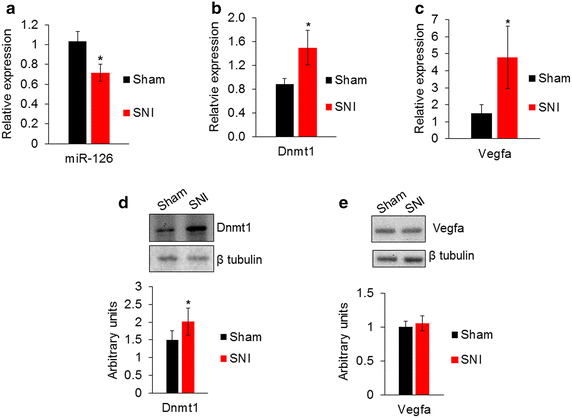
Researchers use our i-FectTM to effectively deliver miR-126 in vivo to modulate Methyl-CpG-binding protein 2 (MeCP2).

MeCP2 regulates gene expression through activation, repression and chromatin remodeling. Mutations in MeCP2 cause Rett syndrome, and these patients display impaired nociception. The researchers observed an increase in MeCP2 expression in mouse dorsal root ganglia (DRG) after peripheral nerve injury: Melissa T. Manners, Adam Ertel, Yuzhen Tian and Seena K. Ajit. Genome-wide redistribution of MeCP2 in dorsal root ganglia after peripheral nerve injury. Epigenetics & Chromatin 20169:23. DOI: 10.1186/s13072-016-0073-5© The Author(s) 2016 Received: 11 March 2016. Accepted: 27 May 2016Published: 7 June 2016...miRNA administration protocol was adapted from previous report of intrathecal miRNA delivery. To administer miRNA mimics, a polyurethane catheter (25G, 5.5 cm long, SAI infusion) was placed into the intrathecal space of the lumber L4–L5 vertebrae under isoflurane anesthesia. The catheter was stereotactically secured under the skin and occluded between injections. A custom miRCURY (Exiqon) miR-126 mimic containing a 5′ cholesterol tag and 3′ fluorescein label was injected at 2 nmol concentration with 4 µl iFECT transfection reagent (Neuromics). A total of 6 µl was delivered into the catheter connection juncture using a 25G blunt end needle on a Hamilton syringe. The catheter was then flushed with 7 µl sterile PBS to ensure miRNA reached the intrathecal space...

Figure: Expression of miR-126 and its target genes Dnmt1 and Vegfa in the DRG after nerve injury. a Relative expression of miR-126 determined by qPCR shows a reduction in miR-126 in SNI model compared to DRG from sham control. U6 was used for normalization (n = 8 sham, n = 7 SNI). b Relative expression of Dnmt1 mRNA and c Vegfa transcripts showed an increase in the DRG after nerve injury compared to control (n = 3). Gapdh was used as a normalizer. d Representative Western blot and quantification showed an increase of Dnmt1 protein in the DRG after nerve injury. e Western blot and quantification showed Vegfa protein was not significantly different in DRG after nerve injury (n = 3 from pooled samples, three DRG were pooled for each sample).


Conclusions: The study shows a regulatory role for MeCP2 in that changes in global redistribution can result in direct and indirect modulation of gene expression in the DRG. Alterations in genome-wide binding of MeCP2 therefore provide a molecular basis for a better understanding of epigenetic regulation-induced molecular changes underlying nerve injury.

Saturday, January 09, 2016

Sleeping Beauty (SB) Transposon for the Study of Cancers

SB Gene Insertion vs Viral Based Methods

With the addition of SB Transposon Systems to our tool set. We have deep interest in how well SB works vs alternative methods. Here Dr. Hyun-Pyo Kim and team demonstrate how the SB Transposon system can be used for Novel Therapeutic Approaches for Various Cancer Types Using a Modified Sleeping Beauty-Based Gene Delivery System (DOI: 10.1371/journal.pone.0086324).

SB vs Viral Based Methods: "Successful gene therapy largely depends on the selective introduction of therapeutic genes into the appropriate target cancer cells. One of the most effective and promising approaches for targeting tumor tissue during gene delivery is the use of viral vectors, which allow for high efficiency gene delivery. However, the use of viral vectors is not without risks and safety concerns, such as toxicities, a host immune response towards the viral antigens or potential viral recombination into the host's chromosome; these risks limit the clinical application of viral vectors. The Sleeping Beauty (SB) transposon-based system is an attractive, non-viral alternative to viral delivery systems. SB may be less immunogenic than the viral vector system due to its lack of viral sequences. The SB-based gene delivery system can stably integrate into the host cell genome to produce the therapeutic gene product over the lifetime of a cell. However, when compared to viral vectors, the non-viral SB-based gene delivery system still has limited therapeutic efficacy due to the lack of long-lasting gene expression potential and tumor cell specific gene transfer ability. These limitations could be overcome by modifying the SB system through the introduction of the hTERT promoter and the SV40 enhancer. In this study, a modified SB delivery system, under control of the hTERT promoter in conjunction with the SV40 enhancer, was able to successfully transfer the suicide gene (HSV-TK) into multiple types of cancer cells. The modified SB transfected cancer cells exhibited a significantly increased cancer cell specific death rate. These data suggest that our modified SB-based gene delivery system can be used as a safe and efficient tool for cancer cell specific therapeutic gene transfer and stable long-term expression."


Figure 8. The effect of modified SB system on the tumor growth in vivo. Lung cancer cells (H358) (A), prostate cancer cell line (DU-145) (B), and ovarian cancer cells (OVCAR3) (C) were harvested by trypsinization, and 1×10⁵ viable cells (as determined by trypan blue exclusion) in a total volume of 200 µl were injected subcutaneously. Two days following tumor seeding, animals were intravenously injected via tail veins with 100 mg/kg gancyclovir (GCV) along with either co-transfection of the empty plasmid (pT. hTp. Con) with the active helper plasmid (pCMV-SB) or co-transfection of the SB system (pT.hTp.HSV-tk.Con) with the active helper plasmid (pCMV-SB). Mice were sacrificed 28 days after tumor injection, and the effect of modified SB system on tumor growth was evaluated by measuring tumor size. doi:10.1371/journal.pone.0086324.g008

Neuromics, with our partner B-Mogen, has the capabilities to engineer custom SB Transposons for your Cancer Research. If interested, please contact me directly at 612-801-1007 or pshuster@neuromics.com. Our process is to first completely understand your unique requirements and from these, formulate a related statement of work with costs, timeline, milestones and deliverables. Thank you. Pete Shuster, CEO and Owner,

Sunday, January 03, 2016

CRISPR-Cas9 and Sleeping Beauty Transposons

Neuromics-B-Mogen Approach

The CRISPR-Cas9 gene editing approach is now officially considered a revolution. This is confirmed by the increasing frequency of this word being used across the web in describing this technique. In fact, it is now appearing in conference titles. see: Genome Engineering: The CRISPR/Cas Revolution 2016COLD SPRING HARBOR - 17 AUG 2016.

We have joined the revolution with our new Sleeping Beauty TransposonTM Systems.
Figure: Sleeping Beauty TransposonTM Systems Gene Integration Process. (A) A depiction of Sleeping Beauty transposon plasmid and Sleeping Beauty transposase enzyme active in cellular nuclei. (B) Transposase enzyme binds to Sleeping Beauty-specific IR/DR sites. (C) Transposase enzyme excises transposon sequence from transposon vector. (D) Transposase enzyme stably integrates transposon sequence at TA site in host cell genome.

Features Include:
  • Simple-"Cut and Paste" Integration and Editing. Check out our Sleeping Beauty Transposon System Users Manual 
  • Potent-100% Stable with No Off target effects with the safest transposon insertion profile. 
  • Fast- Transfect with our transposase + Sleeping Beauty Transposon Reporter Series Vectors. 
  • Cost Effective- Starting at $329.
If you would like us to engineer custom Transposons or gene editing on your cells, please conatact me directly and we will work together to formulate a Statement of Work to your specifications. Pete Shuster, CEO and Owner, Neuromics, pshuster@neuromics.com or cell phone: 612-801-1007

Monday, August 03, 2015

Gene Expression-Have it Your Way

From Delivery to Stable Expression
Neuromics has a successful track record of helping our clients delivery siRNA, miRNA, Plasmids and other oligos in vitro and in vivo with our Transfection Kits...But my vision with our cell based assay solutions has always been to provide engineered cells and plasmids modified to study your genes of interest. I am pleased to announce we are working with Smart Cell /B-MoGen Technologies to make this happen. We now can provide:
Gene Transfer and Expression Products Leveraging the Sleeping Beauty Technology:

Images: B-MoGen Transposon exhibiting stable expression of five fluorescent genes
Advantages of Sleeping Beauty Transposon System:
· Delivery method is time and cost effective compared to lentiviral delivery.
· Increased cargo-capacity when compared to lentiviral delivery.
· Safest insertion profile of all gene transfer methods.
· Commonly integrated as a single copy.
Custom vector design and assembly, including multi-gene (up to 6) vectors.
We are in the process of formulating standard offerings. In the meantime, I am positioned to offer favorable pricing and terms to early adopters of our Sleeping Beauty Solutions. Please contact me directly pshuster@neuromics.com or 612-801-1007. We can together determine your needs and desired outcomes and provide a statement of work with pricing, project milestones and delivery.

Thursday, August 07, 2014

Pain Research Pubs

2014 Is Already a Record Year

I am pleased with the acceleration of publications by Pain Researchers using our Pain Research Markers and Gene Expression Analysis Tools.

Here's a sampling of the most recent: Transfection Regent Publications: Lili Hou, Yanfeng Zhang, Yong Yang, Kai Xiang, Qindong Tan, Qulian Guo. Intrathecal siRNA Against GPNMB Attenuates Nociception in a Rat Model of Neuropathic Pain. Journal of Molecular Neuroscience. July 2014...Ten micrograms of siRNA1- GPNMB dissolved in 30 μl i-Fect transfection reagent (Neuromics, Edina, MN, USA) was administered intrathecally once daily for 7 days, starting from 1 day before CCI surgery...

TRPV1 PublicationsCapsaicin-responsive corneal afferents do not contain TRPV1 at their central terminals in trigeminal nucleus caudalis in ratsOriginal Research ArticleJournal of Chemical Neuroanatomy, Volumes 61–62, November 2014, Pages 1-12 Deborah M. Hegarty, Sam M. Hermes, Tally M. Largent-Milnes, Sue A. Aicher

New insights into mechanisms of opioid inhibitory effects on capsaicin-induced TRPV1 activity during painful diabetic neuropathy. Neuropharmacology, Volume 85, October 2014, Pages 142-150 Mohammed Shaqura, Baled.I. Khalefa, Mehdi Shakibaei, Christian Zöllner, Mahmoud Al-Khrasani, Susanna Fürst, Michael Schäfer, Shaaban A. Mousa
TRPV1 IF in Mouse DRGs


Mohammed Shaqura, Baled.I. Khalefa, Mehdi Shakibaei, Christian Zöllner, Mahmoud Al-Khrasani, Desipramine and citalopram attenuate pretest swim-induced increases in prodynorphin immunoreactivity in the dorsal bed nucleus of the stria terminalis and the lateral division of the central nucleus of the amygdala in the forced swimming test. DOI: http://dx.doi.org/10.1016/j.npep.2014.07.001...... After rinsing with PBS, sections were incubated in PBS containing 0.3% Triton X-100 and 5% normal goat serum at room temperature for 30 min and then incubated with polyclonal guineapig anti-prodynorphin antibody (1:1000, Neuromics, Edina, MN, USA) or polyclonal rabbit ...

All Neuromics' Publications

I will continue to post Pain Research Updates!

Wednesday, July 23, 2014

Pain Research Gene Expression Analysis

Potent and Proven Transfection Kits


Pain Researchers have successfully modulated 25+ genes involved in pain pathways using our Transfection Kits. Highlights include: DOR,The β3 subunit of  Na+,K+-ATPase, NTS1, NAV1.8, Kv 1.1, Kv 9.1, TROY, NOV, β-arrestin, TRPV1, CAV1.2, TLR4 and ASIC and more!  To learn more, check out our Transfection Kit Publications and Blog.

Figures: Intrathecal Kv9.1 siRNA treatment induces pain behaviors in naive rats. A, qRT-PCR quantification of Kv9.1 mRNA in rat PASMC cultures transfected with one of three Kv9.1 siRNA sequences or control siRNA. B, qRT-PCR showing Kv9.1 in vivo knock-down in L5 DRG, 4 d after intrathecal delivery of siRNA #1 compared with vehicle or matched scrambled control.  C, IHC for Kv9.1 in scrambled- and siRNA-treated DRG to determine protein knockdown. Graphs illustrate quantification of number of positive myelinated neurons and mean Kv9.1 signal intensity. D, Kv9.1 siRNA infusion inflicts a reduction in mechanical pain withdrawal thresholds. E, There was no change in heat pain thresholds after siRNA treatment. Vertical arrows on x-axis denote siRNA injections. doi: 10.1523/​JNEUROSCI.3561-12.2012.


We can now add the GPNMB gene to the list of those anaylyzed: Lili Hou, Yanfeng Zhang, Yong Yang, Kai Xiang, Qindong Tan, Qulian Guo. Intrathecal siRNA Against GPNMB Attenuates Nociception in a Rat Model of Neuropathic Pain. Journal of Molecular Neuroscience. July 2014...Ten micrograms of siRNA1- GPNMB dissolved in 30 μl i-Fect transfection reagent (Neuromics, Edina, MN, USA) was administered intrathecally once daily for 7 days, starting from 1 day before CCI surgery...
Abstract: Neuropathic pain is characterized by hyperalgesia, allodynia, and spontaneous pain. Recent studies have shown that glycoprotein nonmetastatic melanoma B (GPNMB) plays a pivotal role in neuronal survival and neuroprotection. However, the role of GPNMB in neuropathic pain remains unknown. The aim of the present study was to assess the role of GPNMB in neuropathic pain. In cultured spinal cord neurons, we used two small interfering RNAs (siRNAs) targeting the complementary DNA (cDNA) sequence of rat GPNMB that had potent inhibitory effects on GPNMB, and siRNA1-GPNMB was selected for further in vivo study as it had the higher inhibitory effect. After sciatic nerve injury in rats, the endogenous level of GPNMB was increased in a time-dependent manner in the spinal cord. Furthermore, the intrathecal injection of siRNA1-GPNMB inhibited the expression of GPNMB and pro-inflammatory factors (TNF-α, IL-1β, and IL-6) and alleviated mechanical allodynia and thermal hyperalgesia in the chronic constriction injury (CCI) model of rats. Taken together, our findings suggest that siRNA against GPNMB can alleviate the chronic neuropathic pain caused by CCI, and this effect may be mediated by attenuated expression of TNF-α, IL-1β, and IL-6 in the spinal cord of CCI rats. Therefore, inhibition of GPNMB may provide a novel strategy for the treatment of neuropathic pain.

If you would like to learn how you can optimize your gene expression analysis studies, do not hesitate to e-mail: pshuster@neuromics.com or direct line: 612-801-1007.