Showing posts with label TRPV1s. Show all posts

Monday, May 15, 2017

TRPV1 Antibodies

Designed for Your Success.
The roots of our TRPV1 Antibodies run deep. They have been key to our ongoing success. We have been providing them to Researchers since the inception of Neuromics (12 years ago).

We measure our success one Researcher at a time. Positive feedback includes references in many publications. There are indeed "Tested; Characterized and Research Ready"

Here's a pub hot off the presses: Noémi Bohonyi, Krisztina Pohóczky, Bálint Szalontai, Anikó Perkecz, Krisztina Kovács, Béla Kajtár, Lajos Orbán, Tamás Varga, Sarolta Szegedi, József Bódis, Zsuzsanna Helyes, Miklós Koppán. Local upregulation of transient receptor potential ankyrin 1 and transient receptor potential vanilloid 1 ion channels in rectosigmoid deep infiltrating endometriosis. Molecular Pain. First published date: May-07-2017. 10.1177/1744806917705564.
Figure: Immunohistochemical staining of TRPV1 receptor in healthy eutopic endometrium and in rectosigmoid DIE nodules. (a) Negative control using tris-buffered saline instead of the primary antibody in normal endometrial tissue. (b) Rectal myenteric ganglia, serving as positive control for TRPA1 expression. (c) Healthy eutopic endometrial tissue. (d) Rectosigmoid DIE nodule. (e) Rectosigmoid DIE nodule, glandular component. (f) Rectosigmoid DIE nodule, stromal component. (d) and (f) Sections shown on panels were taken from the same DIE patient who experienced severe, endometriosis associated pain. Background staining was performed with hematoxylin and eosin to reveal the tissue structure. Black arrow heads denote TRPV1 receptor labelling. Magnification is X400, except panel (d) where it is X100. Scale bars: 50 µm, except panel (d) where it is 200 µm.
We frequently post unique data generated by use of our antibodies.

Monday, January 13, 2014

TRPV1 and Osteoarthritis Related Pain

Our TRPV Antibodies are widely used and frequently published. Many of these feature TRPVs' role in nociceptive pain. Specifically they play important roles in the detection of noxious stimuli and inflammatory hyperalgesia.

TRPV1 has been implicated in OA pain, both in animal models and by the finding that TRPV1 genetic variants are associated with the risk of symptomatic knee OA in humans: S Kelly, R J Chapman, S Woodhams, D R Sagar, J Turner, J J Burston, C Bullock, K Paton, J Huang, A Wong, D F McWilliams, B N Okine, D A Barrett, G J Hathway, D A Walsh, V Chapman. Increased function of pronociceptive TRPV1 at the level of the joint in a rat model of osteoarthritis pain. Ann Rheum Dis doi:10.1136/annrheumdis-2013-203413.
Methods: Rat spinal cord sections from MIA- and saline-treated rats (n=5/group) (see online supplemental methods) were incubated with a polyclonal guinea pig anti-TRPV1 antibody (1 : 500, Neuromics, Edina, Minnesota, USA catalogue number GP14100) and then with Alexa 568-conjugated goat anti-guinea pig secondary antibody (1:300, Molecular Probes). TRPV1 immunostaining was visualised with a Leica DMRB/DM4000 B fluorescence microscope and images were acquired using Openlab software (PerkinElmer)...


Images: Transient receptor potential vanilloid 1 (TRPV1) immunoreactivity in the spinal cord. TRPV1 immunofluorescence detected in superficial dorsal horn (10× magnification) in rat lumbar (L3–L5) spinal cord at day 28 post-intra-articular injection of saline (A) or mono-iodoacetate (MIA) (B). Minimum and maximum brightness values were altered (32.01 min and 90.14 max) using Image J so as to highlight the area of TRPV1 positive staining. (C) Quantification of TRPV1 immunofluorescence in superficial dorsal horn of spinal cord taken from rats at 14 or 28 days following intra-articular injection of MIA and at day 28 following intra-articular injection of saline. Data are expressed as mean and SEM (n=5 per group).

Clinical trials of oral TRPV1 antagonists have been limited by on-target-induced hyperthermia. Here experimental evidence for increased functional role of TRPV1 at the level of the joint in a model of OA pain and the demonstration that blockade of joint TRPV1 ablates sensory afferent sensitization and pain behaviour support future targeted site-specific investigations of the therapeutic potential of TRPV1 for OA pain associated with synovitis. This could be good news for OA sufferers.

Friday, February 24, 2012

TRPV1, Gut Inflammation and Pain

"Where there's smoke there's fire" or in this study, where there's inflammation there is pain: Robert P. Watson, Elliot Lilley, Moh Panesar, Gurdip Bhalay, Steven Langridge, Shin-Shay Tian, Conor McClenaghan, Anna Ropenga, Fanning Zeng, Mark S. Nash. Increased prokineticin 2 expression in gut inflammation: role in visceral pain and intestinal ion transport. Neurogastroenterology & Motility. Volume 24, Issue 1, pages 65–e12, January 2012....Formalin-fixed, wax-embedded tissues with no overt signs of pathology were purchased from Asterand (Detroit, MI, USA); informed consent had been sought and received from all donors. All tissues were used in accordance with the Human Tissue Act 2004 (UK)...guinea pig anti-TRPV1 antibody (GP14100 – Neuromics, Edina, MN, USA)...


Images: expression of prokineticin receptors in human and rat tissues. (A) Immunohistochemical analysis of PKR1 expression in the myenteric and submucosal ganglia of human stomach, ileum, and colon. Pkr1 (B) and Pkr2(C) expression in a range of human tissues determined using qRT-PCR. (D, E) Immunohistochemical of PKR1 distribution in rat DRG showing an absence of expression in large diameter, NF200 positive neurons (D), but co-expression with TRPV1 in presumptive nociceptive sensory neurons (E). (F) Distribution of Pkr2 mRNA by in situ hybridization in rat DRG. The IHC/ISH images shown are representative of the data obtained from n = 3 donors/animals.


Key Results Prok2 gene expression was up-regulated in biopsy samples from ulcerative colitis patients, and similar elevations were observed in rodent models of inflammatory colitis. Prokineticin receptor 1 (PKR1) was localized to the enteric neurons and extrinsic sensory neurons, whereas Pkr2 expression was restricted to sensory ganglia. In rats, PROK2-increased intracellular calcium levels in cultured enteric and dorsal root ganglia neurons, which was blocked by Compound 3. Moreover, PROK2 acting at prokineticin receptors stimulated intrinsic neuronally mediated ion transport in rat ileal mucosa. In vivo, Compound 3 reversed intracolonic mustard oil-induced referred allodynia and TNBS-induced visceral hypersensitivity, but not non-inflammatory, stress-induced visceral pain.

Check out our Pain and Inflammation Research Antibodies.

Saturday, February 28, 2009

TRPV1 with a Twist

Kudos to Dr. Marna Erickson and her team at the University of Minnesota. They recently published excellent work demonstrating a relationship between TRPV1 -EGFR signaling and skin cancer.

Ann M. Bode, Yong-Yeon Cho, Duo Zheng, Feng Zhu, Marna E. Ericson, Wei-Ya Ma, Ke Yao, and Zigang Dong. Transient Receptor Potential Type Vanilloid 1 Suppresses Skin Carcinogenesis.Cancer Res., Feb 2009; 69: 905 - 913.

"TRPV1 interacts with EGFR, leading to EGFR degradation. Notably, the absence of TRPV1 in mice results in a striking increase in skin carcinogenesis. The TRPV1 is the first membrane receptor shown to have a tumor-suppressing effect associated with the down-regulation of another membrane receptor."

...dorsal skin samples (100 mum) were processed and immunostained. For the human skin cancer tissue array, we used anti- TRPV1 -(Neuromics), anti-EGFR (Cell Signaling), and Alexa Fluor 488 and 647-conjugated secondary antibodies. Mouse skin samples were immunostained...

Saturday, November 22, 2008

Excellent TRPV1-N IHC and WB

Kudos to Dr. Federica MF van Dissel-Emiliani and her team for the excellent Immunohistochemistry and Western Blot results using our TRPV1-N Antibody(Catalog #: RA10110) . The antibody was in their study demonstrating the sensitivity of spermatogenesis to capsaicin.

Here's the related publication:

Sefika C Mizrak, Bart M Gadella, Hatice Erdost, Aytekin Ozer, Ana MM van Pelt, Federica MF van Dissel-Emiliani. Spermatogonial stem cell sensitivity to capsaicin: An in vitro study. Reproductive Biology and Endocrinology 2008, 6:52 doi:10.1186/1477-7827-6-52.
Anti TRPV1 antibody staining: Bouin's fixed, paraffin embedded 5 um-thick rat testis sections were deparaffinized and boiled in a microwave oven (700 Watt) 3x10 min in sodium citrate buffer (0.1 mM, pH=6) for antigen retrieval. All subsequent incubations were performed for 1 hour at room temperature. The slides were then blocked with 5 % goat serum in 1 % BSA/PBS and incubated with the rabbit anti human - VR1 antibody (Neuromics, Edina, MN, USA; 1:500 in 1% BSA/PBS). Biotinilated goat anti-rabbit secondary antibody (BA-1000, Vector Labs; 1:200 in 1% BSA/PBS) was then applied. The ABC kit was finally used according to the manufacturer's instructions. Antibody reactivity was finally detected by diaminobenzidine staining (DAB, Sigma, St. Louis, MO, USA). Sections were counterstained with hematoxylin, dehydrated, mounted with Pertex and studied. Goat serum was applied on control sections.
Image: Photomicrograph of a section through an adult rat testis showing TRPV1 labelling of premeiotic germ cells, at stage II of the seminiferous epithelium. Arrow, undifferentiated spermatogonia; arrow head, early pachytene spermatocytes; asterisk, Sertoli cells.
SDS-PAGE and Western blotting: Protein lysates from the cell lines Gc-5spg and Gc-6spg and the control glioma cell line (A10-85) were prepared in RIPA buffer (PBS, 1% NP40, 0.5% sodium deoxycholate, 0.1% SDS) including 1 mM phenylmethylsulfonylfluoride. Of each sample, 50 μg were separated on a 12% SDS-polyacrylamide gel and blotted onto a polyvinylidene fluoride membrane (Millipore Corp., Bedford, MA, USA). Western blots were blocked using Blotto-A, containing 5% Protifar (Nutricia, Zoetermeer, The Netherlands) in Tris-buffered saline (10 mM Tris; 150 mM NaCl, pH 7.6), including 0.05% Tween-20. Rabbit polyclonal anti-VR1 antibody (Neuromics) was diluted 1:1000 in Blotto-A and incubated for 1 h at room temperature. Blots were washed with Tris-buffered saline with 0.05% Tween-20. After incubation with goat anti-rabbit-HRP (P-0260 Dako Cytomation, 1:5000 inBlotto-A) secondary antibody for 1 h, blots were incubated with the electrochemiluminescence kit (ECL, Amersham Pharmacia Biotech, Little Chalfont, UK)and exposed to an x-ray film (RX-omat, Kodak, Chalone / Saone, France).

Monday, November 03, 2008

Power Trio of Pain Research Antibodies

I received a call from a customer asking if there were any publications referencing our rabbit Alpha 2a Adrenergic Receptor antibody. The resulting search found an article referencing excellent results using a trio of of our pain research antibodies. The research was conducted by our friend, Dr. Hui-Lin Pan and his team at University of Texas M.D. Anderson Cancer Center.

Shao-Rui Chen, Hao-Min Pan, Timothy E. Richardson, and Hui-Lin Pan. Potentiation of Spinal α2-Adrenoceptor Analgesia in Rats Deficient in TRPV1- Expressing Afferent Neurons. Published online 2007 March 24. doi: 10.1016/j.neuropharm.2007.03.009.

Images: Double immunofluorescence labeling showing α2C-AR- and TRPV1-immmunoreactivity in the spinal cord dorsal horn of one vehicle-treated and one RTX-treated rat. Representative confocal images showing α2C-AR- and VR1 C-terminus (TRPV1)-immunoreactivities in the spinal dorsal horn of one vehicle- and one RTX-treated rat. All images are single confocal optical sections. Scale bar, 100 μm. Inset: high-magnification images (scale bar = 10 μm) showing the distribution of α2C-AR- and TRPV1-immunoreactivity in the lamina I and II. Neuropharmacology. 2007 June; 52(8): 1624–1630.

Rabbit VR1 N-Terminus (TRPV1) is also referenced.

Related Reagents:
Alpha 2c
Pain and Inflammation Antibodies
Vision and Retina Antibodies

Thursday, August 28, 2008

No Pain; No Gain


We work hard to make sure our Pain and Inflammation antibodies continue to be a gold standard for researchers. We follow up with virtually all researchers to make sure they work to expecations in each unique application.

We also look for references in current publication. Although published in 2006, this one just crossed our radar scope.
It contains multiple images of 3 of our top sellers: Mu Opioid Receptor, VR1 C-terminus (TRPV1) and VR1 N-Terminus (TRPV1).

Tuesday, August 05, 2008

TRPV1 Staining of Mouse DRG

This excellent staining comes to us courtesy of Katharina Zimmermann (Childrens Hospital Boston, Clapham Lab). This is some of the best staining we've seen using our VR1 C-Terminus (TRPV1) - mouse specific antibody.

Images: TRPV1 staining of C57BL/6 mouse dorrsal root ganglia. Tissues were stained using Alexa Fluor© 488 (Green) and counterstained with DAPI (blue).

cryosections, 10 microns thickness

Wednesday, June 04, 2008

TRPV1 Pub

Katrin Schnizler, Leonid P. Shutov, Michael J. Van Kanegan, Michelle A. Merrill, Blake Nichols, G. Stanley McKnight, Stefan Strack, Johannes W. Hell, and Yuriy M. Usachev. Protein Kinase A Anchoring via AKAP150 Is Essential for TRPV1 Modulation by Forskolin and Prostaglandin E2 in Mouse Sensory Neurons. J. Neurosci., May 2008; 28: 4904 - 4917 ; doi:10.1523/JNEUROSCI.0233-08.2008

......anti-TRPV1 antibody (catalog #RA14113; Neuromics, Edina, MN) and 30 mul of prewashed protein-A...mm NaCl). Probing was done using the Neuromics anti-TRPV1 antibody (1:500 dilution...with other TRPV1 antibodies either from Neuromics (N-terminus rabbit anti-TRPV1) or from......

Tuesday, September 19, 2006

New TRPV1-C Publication

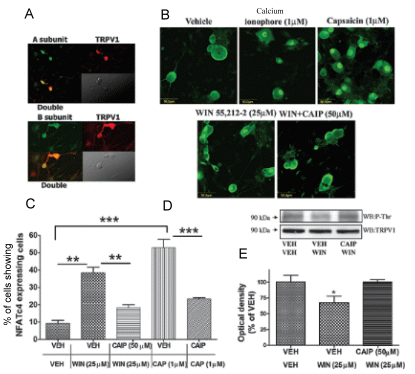
Amol M. Patwardhan, Nathaniel A. Jeske, Theodore J. Price, Nikita Gamper, Armen N. Akopian, and Kenneth M. Hargreaves. The cannabinoid WIN 55,212-2 inhibits transient receptor potential vanilloid 1 (TRPV1) and evokes peripheral antihyperalgesia via calcineurin. PNAS 103 (July 2006): 11393-11398.


Figure: WIN activates calcineurin in TG neurons and dephosphorylates TRPV1. (A) Calcineurin subunits are coexpressed with TRPV1. The colocalization of calcineurin A subunit (Upper) and B subunit (Lower) with TRPV1isdemonstratedin the respective panels.(B) The effect of various treatments on the nuclear translocation of NFATc4 (calcineurin activation). Cultured TG neuronswere exposed to vehicle, ionomycin (1 M), capsaicin (1 M), WIN (25 M), or WINCAIP(25 M50 M), and immunohistochemistry was performed by using an antibody againstNFATc4. (C) Graphical representation of the percent of NFATc4 positive neurons showing nuclear translocation of NFAFc4 after treatment with VEHVEH, VEHWIN (25 M), CAIP (50 M)WIN, VEHCAP (1 M), or CAIP(50 M)CAP (n 4 independent cultures assessed by blinded observer; n 152–180 cells per condition; **, P<0.01,anovawith n="3">